Minecraft is a cube grid, so anything curved or organic is a lie told with stairs. Statues are the hardest thing to build well in the game, and the reason is not detail – it is that most builders start from the surface instead of the volume.
Build the mass, then carve
The working method is not to draw an outline and fill it. It is to block out the subject in large rectangular masses at the right proportions, then remove blocks until it stops being rectangular.
A figure is a box for the torso, boxes for the limbs, a box for the head, all at the correct relative sizes and positions. Ugly, fast, and completely correct in proportion. Everything after that is subtraction.
Starting from the outline produces the opposite failure: a silhouette that looks right from one angle and has no volume behind it. If you have ever built something that looked good in a screenshot and wrong in game, this is why.
Scale is the first decision
Organic shapes need blocks to describe a curve, and the number of blocks available is set by the size. A humanoid statue under about fifteen blocks tall cannot have a convincing face, because there are not enough blocks in the head to make one.
The rough thresholds worth knowing:
- Under 10 blocks – shape only. A recognisable pose, no features. This is fine and it is what most decorative statues should be.
- 15 to 25 blocks – features become possible but coarse. Eyes as single blocks, hands as mittens.
- Over 40 blocks – genuine detail, individual fingers, cloth folds. Also a multi-day project.
Choosing a size below what your detail ambitions need is the most common planning mistake, and the fix is always to build bigger rather than to try harder.
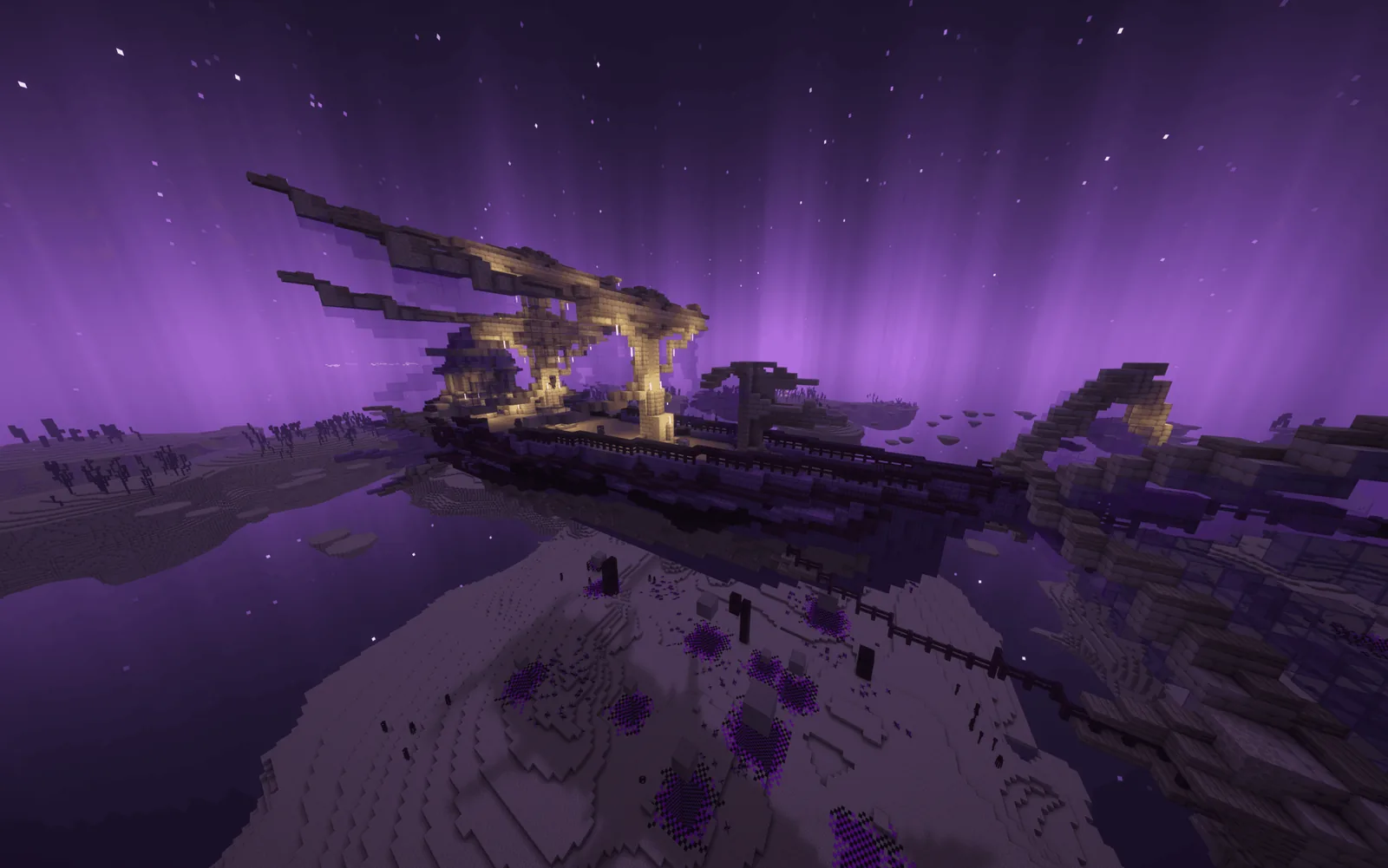
Curves: stairs, slabs and the 45-degree trap
A diagonal made of blocks steps evenly and reads as a staircase. A convincing curve steps unevenly – long runs at the shallow part, short runs where it turns.
The practical rule is that no two consecutive steps should be the same length. A run of 4, 3, 3, 2, 1, 1 reads as a curve. A run of 2, 2, 2, 2, 2 reads as a diagonal line.
Stairs and slabs fill the half-steps and do most of the smoothing, but they carry a cost: stairs have a fixed orientation and the wrong one is visible. Placing them for shape rather than for logic is what makes an organic build look like it is made of stairs.
For very large shapes, the block palette can substitute for geometry. A gradient between two similar blocks across a surface implies curvature the geometry does not have, which is the same palette work used everywhere else, applied to form.
Reference, and why freehand fails
Almost nobody can build an anatomically plausible figure without a reference, and the ones who can have built dozens.
The practical approach is to find a front view and a side view of the subject, decide the height in blocks, and work out the major proportions as block counts before placing anything. A human figure is roughly seven and a half heads tall; getting that one ratio right does more than any amount of detail.
Animals are easier than humans because viewers know human proportion intimately and animal proportion loosely. A first statue should be an animal.
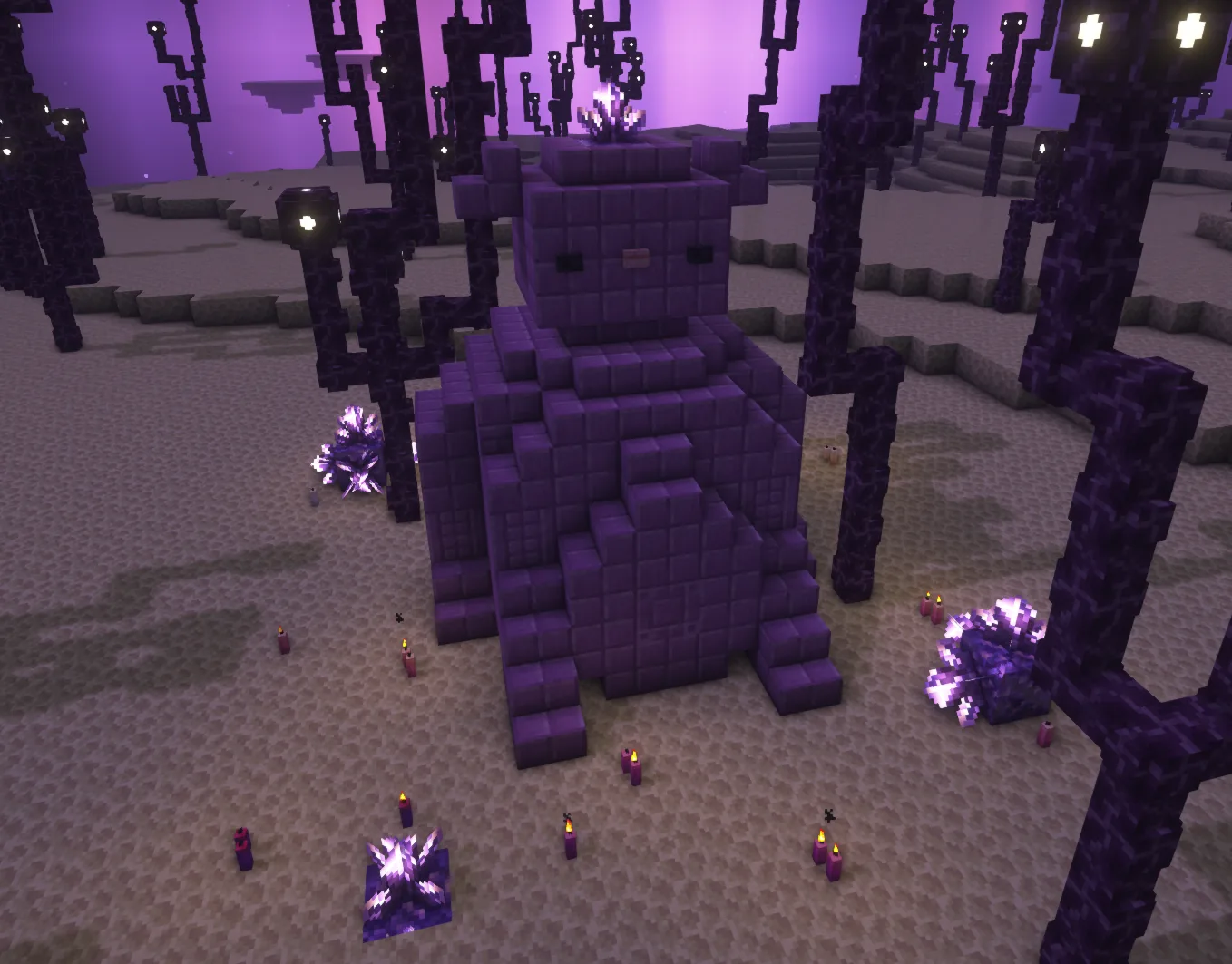
Where statues go wrong at the end
Three failures, all in the final stage.
Over-detailing at the wrong scale. Adding individual fingers to a 12-block figure produces noise, not detail. Detail has to match the block budget.
Uniform material. A single-block statue has no shadow information beyond the geometry. Two or three tones of the same material – stone, andesite, diorite – let the form read at a distance.
No base. A figure standing directly on grass looks dropped in. A plinth, even a simple one, is what makes it a statue rather than a model, and it follows the same foundation logic as a building.
A first project
- Pick an animal, not a person.
- Decide the height. Make it bigger than feels necessary – 20 blocks rather than 10.
- Block out the masses in a single cheap material. Do not detail anything.
- Walk around it and fix proportions while it is still boxes. This is where the build is won or lost.
- Carve the boxes down to shape, using uneven step lengths.
- Only then swap materials in for tone, and add a plinth.
Step four is the one to be patient with. A wrong proportion caught at the box stage costs two minutes; caught after detailing it costs the build. The same order – masses first, surface last – is what makes large builds work at all.
Images: MES – Moog’s End Structures project gallery.