Everyone builds a dirt hut on night one and everyone abandons it by day ten. That is a waste of an hour and, more importantly, a waste of the location – the spot you chose while panicking is usually a good spot, and the build that replaces it usually goes somewhere else.
Build the second base first
The proposal is simple: spend night one in a hole as usual, then on day two build something you will still be using at hour two hundred. Not a castle – a small, well-placed, expandable structure.
The thing that makes a starter base outgrown is almost never its size. It is that it was built in the wrong place, with no room to extend, in materials that cannot be extended in.
Site selection
- Near water, for transport and for a farm.
- Near at least two biomes, for resource variety.
- On or beside a slope, so the build has terrain to relate to.
- Not in a village, which brings raids and restrictions.
- Somewhere you can find again without coordinates.
The last point matters more than any of the others in the first ten hours. A base beside a distinctive landmark is a base you get back to.
The minimum viable base
- A room you can stand in, with a ceiling above three blocks.
- Bed, crafting table, furnace, two chests.
- A door, not a hole.
- Lighting that is not four torches on the floor.
- A small farm plot outside.
That is one afternoon in stone and wood, and it is a base rather than a shelter. The difference is the ceiling height and the door.
Designing for expansion
The most useful decision is to pick a module – a room size and a wall height – and commit to it. Every later addition uses the same dimensions, which means the base grows coherently instead of sprawling.
Seven by nine with four-block walls is a good module. Two of them side by side is a hall; one at right angles is a wing.
Materials you can get more of
Building the starter base from something rare is how you end up unable to extend it. Stone, cobblestone, deepslate and any wood are effectively infinite; anything requiring a trip is not.
Pick the palette on day two and stick to it for the whole world. A base built in three palettes over two hundred hours never looks right.
What to add, in order
- Storage, properly, before it becomes a problem.
- A farm – wheat, carrots and potatoes, fenced.
- Animal pens, for food and leather.
- A mine entrance, inside the base if possible.
- A smelting area with more than one furnace.
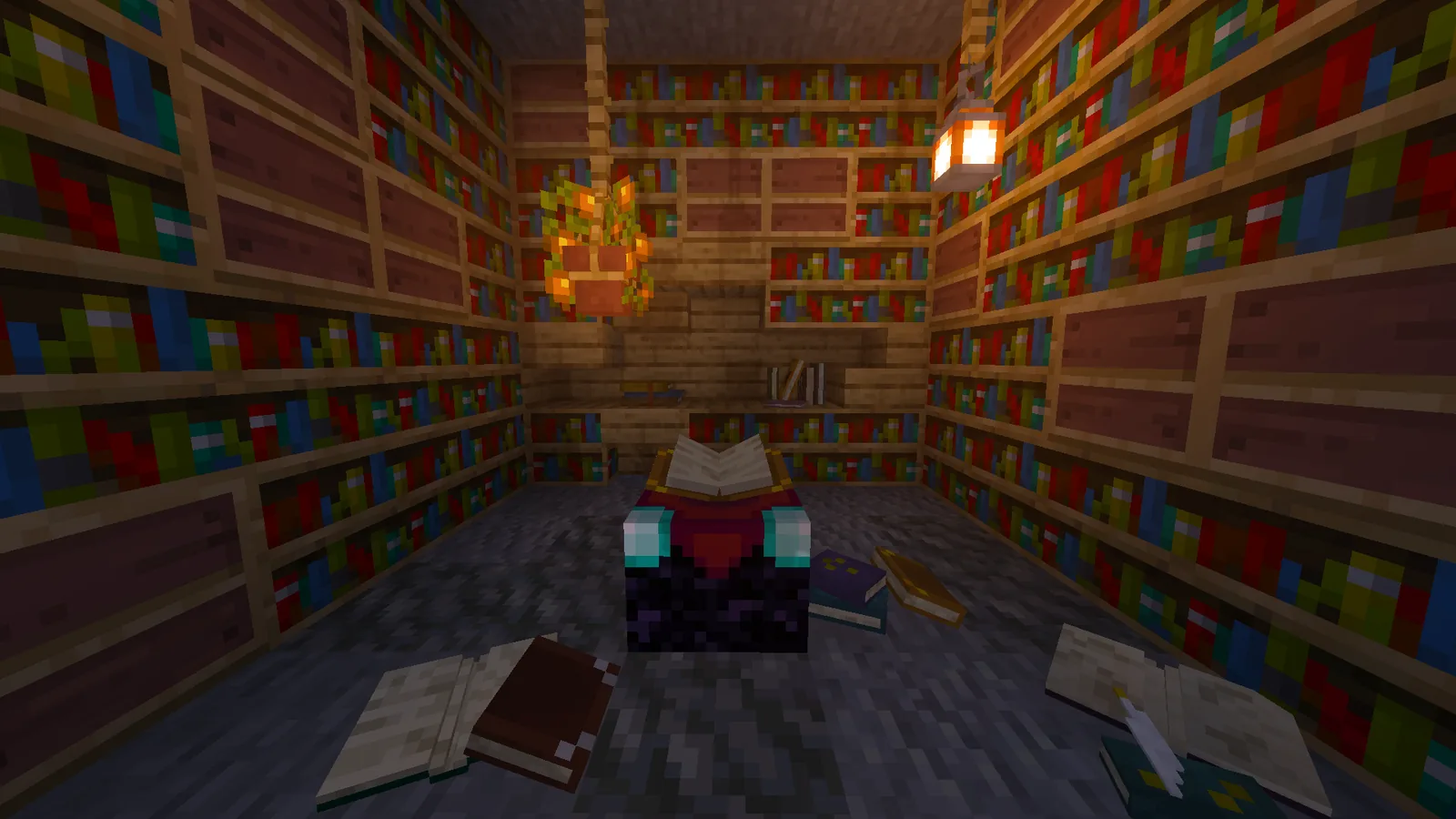
- An enchanting room, once you have the bookshelves.
Putting the mine entrance inside the base is the decision that saves the most time over a world’s life. Every mining trip starts and ends at your storage.
Storage before you need it
The single most common base problem is storage added reactively – a chest here, two there, a pile in the corner. Building a dedicated storage room early, larger than currently needed, prevents the sprawl entirely.
How to lay it out so it stays usable is its own problem, and storage room design covers the layouts that scale.
The farm
Food security by hour five removes the thing that actually kills early worlds. A fenced plot with wheat, carrots and potatoes, lit, is twenty minutes of work.
Making it a self-harvesting farm later is a small upgrade to the same plot rather than a rebuild, provided you left room for the mechanism at one end.
Why the dirt hut persists
Because day two is the point of maximum ambition and minimum resources, so people either build something too big to finish or nothing at all. The answer is the module – something small enough to complete today and structured so tomorrow’s addition fits.
Sitting it in the landscape
Even a starter base benefits from not being on a flattened square. Cutting into the slope behind it and building a low retaining wall takes twenty minutes and is the difference between a house and a house that belongs there.
That relationship between build and ground is what most first bases lack, and the techniques for it are in sitting a build into terrain.
A day-two checklist
- Pick a site you can find again.
- Choose a module and a palette.
- Build one room properly.
- Farm plot outside, fenced and lit.
- Storage room next, bigger than you need.
- Leave one clear side for expansion.
Six decisions on day two, and the base you build becomes the base you keep.
Images: Beautify! project gallery on Modrinth.