Key takeaways
- Small builds have nowhere to hide, which makes them the better practice and the harder task.
- Depth – blocks pushed in and out of the wall plane – does more than any texture choice.
- Detail blocks work best at ground level and around openings, where the eye already goes.
The usual advice is to build big. It is the wrong advice for learning. A large build reads as impressive from a distance regardless of quality, and the feedback loop that teaches you anything happens up close.
Why small is harder
On a small structure, every block is visible and every proportion is legible. There is no scale to disguise a wall that is flat, a roof that is too shallow, or a door placed without a frame. You see the mistakes because there is nothing else to look at.
That is exactly why a village of eight good small houses teaches more than one castle. You get eight iterations of the same problems, at a scale where each attempt takes twenty minutes rather than a weekend.
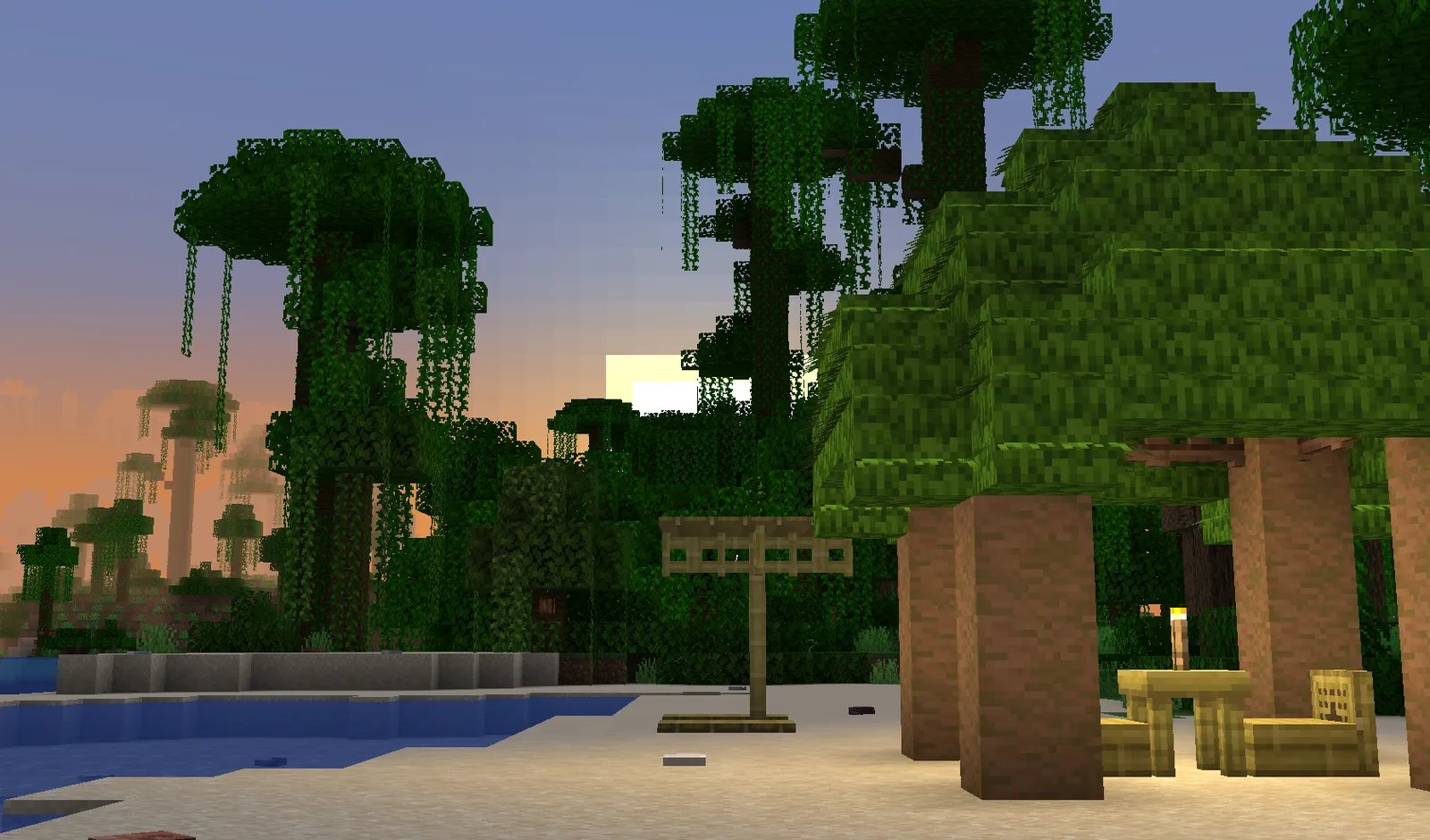
Depth is the main tool
A flat wall is the most common failure in amateur building. The fix is not more block types, it is pushing parts of the wall forward and back by one block. A recessed window, a protruding chimney, a foundation course that steps out by one – each one creates shadow, and shadow is what makes a surface read as built rather than painted.
Stairs and slabs are the cheap way to do this, because they give you half-block offsets without adding a full block of thickness.
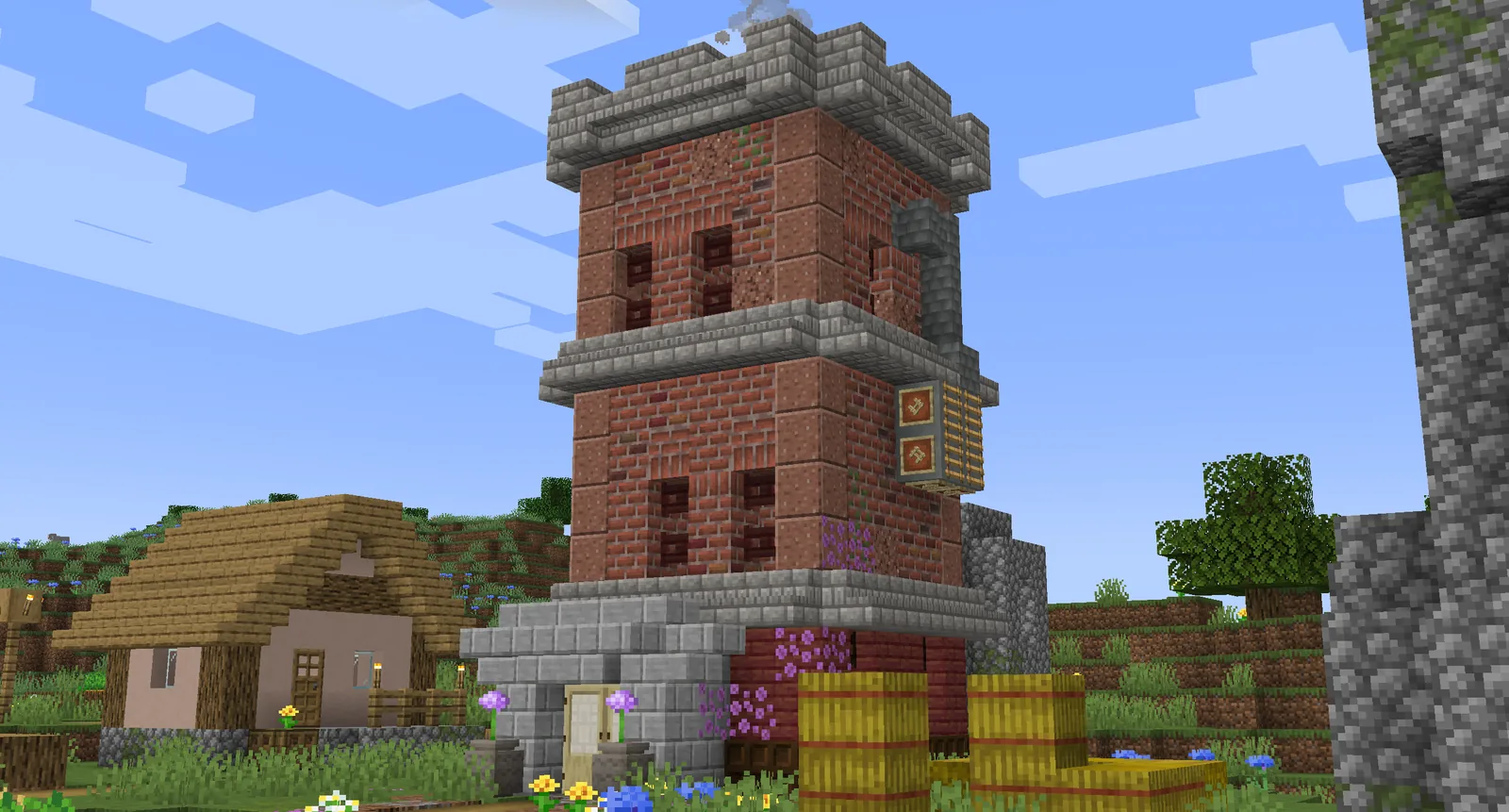
Where detail blocks earn their place
Ground level and openings. The base of a wall, where it meets the terrain, is where a hard straight line looks most artificial – breaking it up with pebbles, roots, or mixed blocks is the single highest-value detail in any build.
Doors and windows are the second. A frame of a contrasting material around an opening costs six blocks and changes how finished a house looks more than any amount of interior decoration.
Everywhere else, restraint. Detail scattered evenly across a facade reads as noise. Detail concentrated where the eye already goes reads as craft.
The terrain connection
A build that sits on flattened ground looks placed. A build whose foundation follows the slope, with the ground brought up to meet it in a few spots, looks like it belongs. This is more work than it sounds and it is the difference most often visible between a good builder and a great one.
Our view is that terrain integration is the most transferable skill in Minecraft building. Palette taste varies, styles go in and out of fashion, but a build that meets its ground properly has looked good since 2011 and will keep looking good.
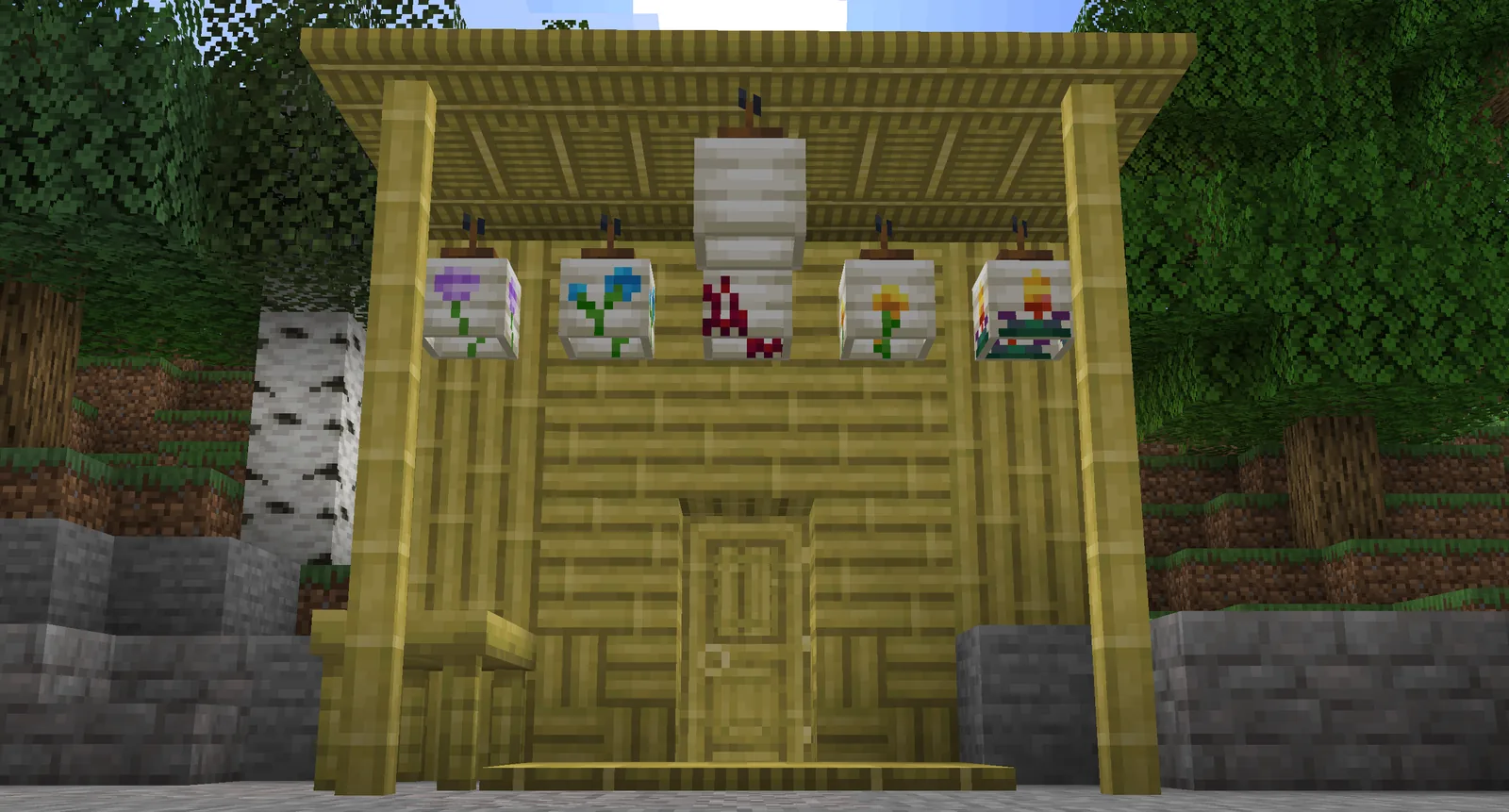
A practice routine
Build the same small house five times in a row, changing one variable each time: palette, roof pitch, window placement, depth, terrain. Keep all five standing next to each other. The comparison teaches faster than any tutorial, because the differences are yours rather than someone else’s.
Palette selection is covered in the block palette guide, and roof geometry in roof building techniques.
The interior problem
Most small builds are finished on the outside and empty inside. An interior needs three things to read as lived in: a light source that is part of the design, a piece of furniture built from blocks rather than placed as an item, and one area of clutter.
Clutter is the part builders resist because it feels untidy. A stack of barrels in a corner, a few item frames, a workbench with tools around it – these are what make a room look used rather than staged.
Roof material and pitch together
Pitch and material interact. A steep roof in a dark material reads as heavy and works on a tall narrow building. A shallow roof in the same material reads as flat. Changing one usually means changing the other, and builders who only adjust pitch often conclude their proportions are wrong when the material was the problem.
Scaling up without losing detail
When you enlarge a small build, resist scaling every element equally. Doors, windows and railings stay at human scale regardless of building size – that is what makes a large structure read as large. Scaling everything uniformly produces a building that looks the same size as the original, only further away.
The five-minute test
Stand thirty blocks back and squint. If you cannot tell where the roof ends and the wall begins, add depth. If the whole thing reads as one grey mass, add value contrast. If it looks busy, remove detail. Three questions, five minutes, and most small build problems are diagnosed.
Images: Twigs project gallery on Modrinth.