Key takeaways
- Structory’s generated structures are built to a hand-crafted standard, not an algorithmic one
- Three techniques are worth copying: mixed palettes, deliberate asymmetry, and implied decay
- You can study them in-game rather than from screenshots, which is the real advantage
Most Minecraft building advice arrives as a tutorial – here is a technique, here is the block list, here is the result. It works, and it also produces a lot of builds that look like the tutorial. The faster way to improve is to walk through good buildings and take them apart, and the problem has always been finding good buildings to walk through.
Structory solves that incidentally. It is a worldgen pack that adds hand-built ruins and structures to your world, and because they generate around you, you get a permanent supply of reference material you can stand inside, break apart and rebuild.
Technique one: mixed palettes
The most obvious difference between a beginner build and a good one is that the beginner build uses one block per surface. A wall is cobblestone. A floor is oak planks. Everything is uniform, and uniformity reads as flat.
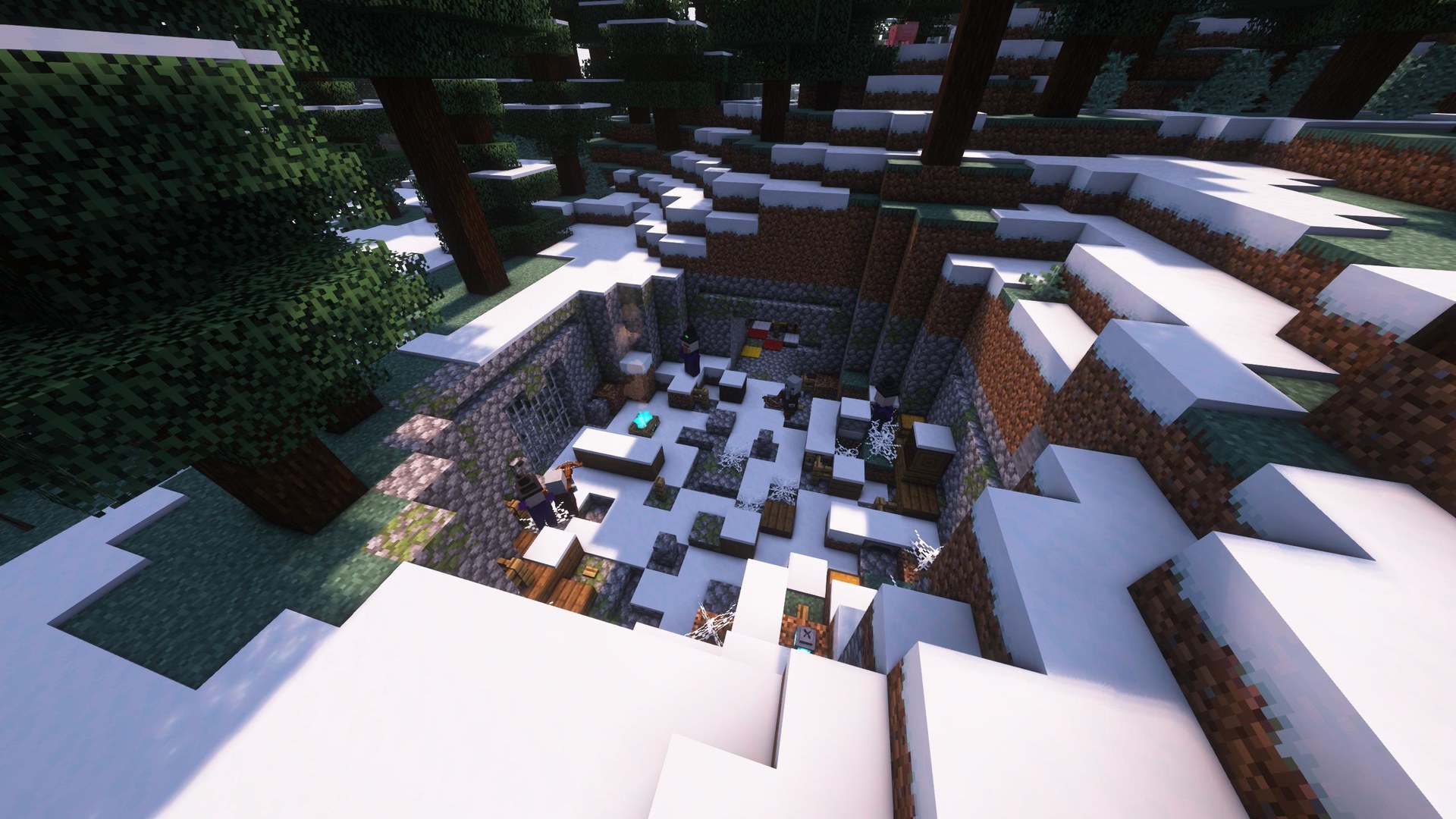
Structory’s walls are never one block. A stone wall contains cobblestone, stone bricks, cracked and mossy variants, the occasional andesite, and gravel where it meets the ground. No single variant dominates, and the mix is weighted rather than random – the base block is clearly the base block, and the others are interruptions.
The lesson is a ratio rather than a list. Pick one primary block at roughly seventy percent, one secondary at twenty, and scatter the remainder. That single change does more for a build than any new block type.
Technique two: asymmetry that means something
Player builds are symmetrical because symmetry is easy to plan and easy to execute. Real buildings are not, and the reasons they are not are legible – an extension was added later, one side faces the weather, a section collapsed.
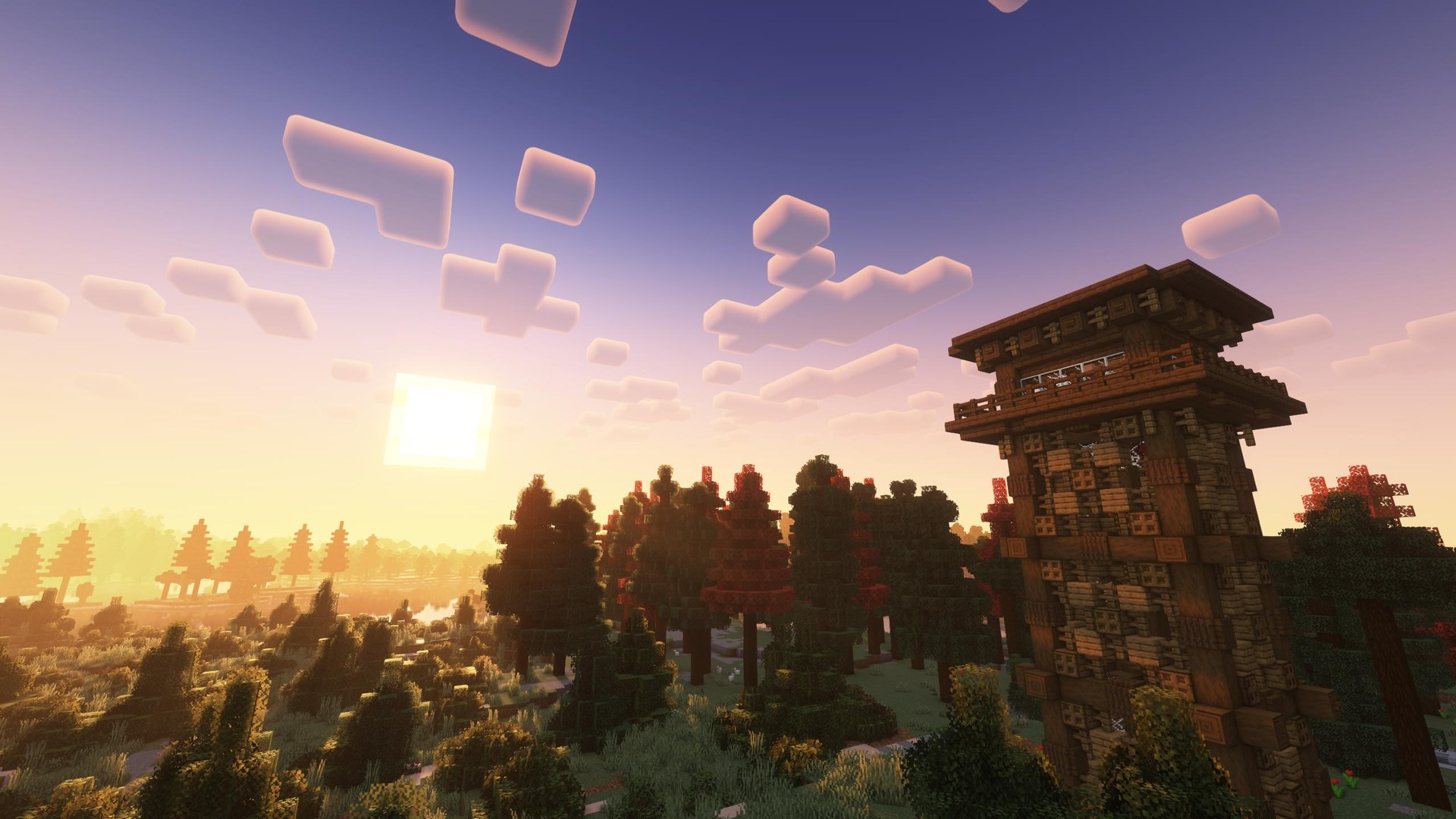
Look at the manor and the fire tower in this pack and the asymmetry always has a cause you can name. A wing is a different height because it was built for a different purpose. A staircase is on one side because the entrance is on that side. That is different from randomness, and it is the distinction most builders miss when they try to make something look irregular.
Technique three: decay as construction
Ruins are the hardest thing to fake. The usual attempt is to build a complete structure and then remove blocks, which produces something that looks damaged rather than something that looks old.
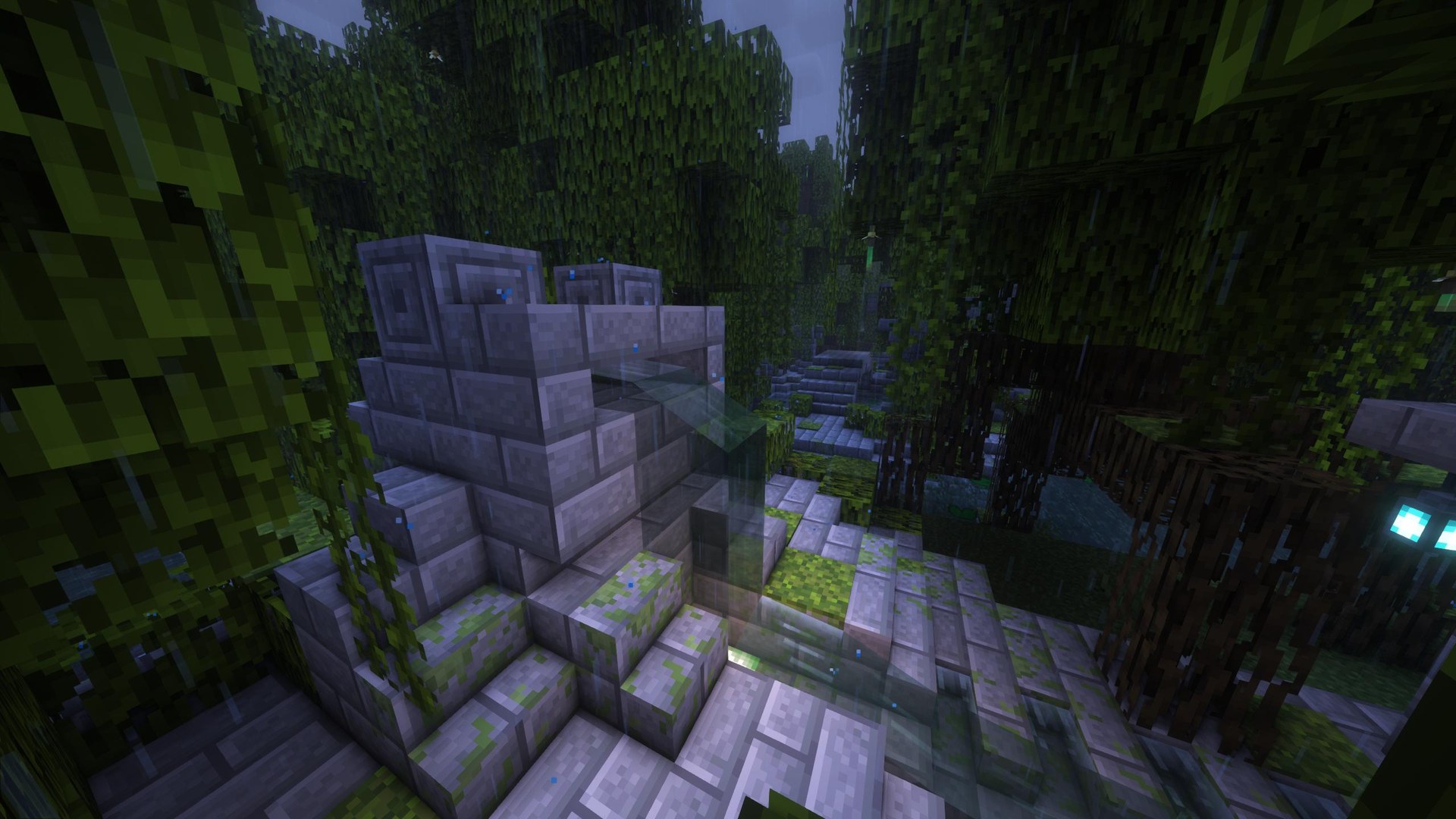
The structures here are built the other way around – the decay is designed first. Walls fall in a direction. Roofs collapse inward where the support failed. Vegetation enters at the openings and spreads from there, not uniformly. There is rubble on the ground below the missing section, because the blocks that left the wall went somewhere.
That last detail is the single most copyable thing in the pack. Rubble below a break is a two-minute addition that immediately makes a ruin read as a ruin.
How to study them in practice
- Find a structure and walk the exterior first – note the silhouette before the detail
- Count the block types in one wall and work out the rough ratio
- Look at where the decay starts and ask what failed first
- Go inside and check what is happening at the floor line, which is where most player builds stop
- Rebuild a section from memory somewhere else, then compare
That last step is the one that actually teaches. Copying while looking teaches you nothing; rebuilding from memory reveals exactly which decisions you did not notice.
A fourth thing: where the ground meets the wall
Almost every player build ends at a hard line where the structure stops and the terrain starts. Structory’s do not – there is gravel, rubble, a partly buried course of stone, or vegetation climbing the first metre. Blurring that junction is cheap to do and it is the detail that most reliably separates a build that sits in the landscape from one that was dropped onto it.
What it will not teach you
Scale. These are small structures, and the problems of a large build – massing, silhouette at distance, how a roof reads from three hundred blocks away – do not appear at this size. For that side of it, our roof building techniques covers proportion decisions that only matter on bigger structures.
It also will not teach interiors, because generated structures are necessarily sparse inside. That is where a furniture mod like Handcrafted does more for you than any reference.
Worth installing as a building tool
This is an unusual reason to install a worldgen mod, and it is a good one. The structures are sparse, loot-light and terrain-neutral, so the pack costs you almost nothing in world disruption – and in exchange your world contains a rotating gallery of well-made buildings you can study whenever you run out of ideas.
We covered the pack’s exploration side separately in our Structory: Towers review. This is the other half of why it is worth having installed.
Source
Images and project details from the Structory page on Modrinth.