Key takeaways
- The three things that decide whether an SMP survives are moderation, land claims and backups – not the spawn build.
- Whitelisted servers with an application are almost always better than open ones, for the obvious reason.
- Ask how long the world has been running before you build anything. Most servers reset more often than they admit.
SMP means survival multiplayer, and in practice it means a shared world where other people’s decisions are part of your game. That is either the best thing about Minecraft or the reason you stopped playing it, and which one depends almost entirely on how the server is run.
Here is what to check before you spend a hundred hours building on someone else’s hardware.
The three things that matter
Moderation
Not rules – moderation. Every server has rules on a web page. The question is whether anyone enforces them, how quickly, and whether the staff are players with opinions about who is right. Ask in the Discord how a recent dispute was handled; the answer tells you more than any rule list.
Land claims
Either the server has a claim system – a plugin that stops other players breaking your blocks – or it runs on trust. Both work. What does not work is a server that promises trust and has no rollback capability, because the first griefing incident then becomes permanent.
Backups
Ask how often the world is backed up and where the backups live. A server that cannot answer that question will eventually lose your base to a corrupted chunk or a bad plugin update, and it will happen on the week you finished the build.
The types of SMP
Vanilla or near-vanilla, where the appeal is a pure survival world with other people in it. Modded, where everyone runs the same pack and the server exists to support it. And themed or roleplay servers, which are closer to a long-running shared story than to a survival world.
A fourth category worth knowing: private friend servers hosted on Realms or a small rented box, which are not really SMPs in the public sense but solve the same problem with none of the moderation risk.
Questions to ask before joining
How long has the current world been running? When was the last reset, and why? How many players are actually online on a normal evening rather than at peak? Is there a claim system? Who pays for the hosting, and what happens if they stop?
The last one is the question nobody asks and the one that ends the most servers. A world funded by one person’s goodwill has a lifespan measured in that person’s interest.
Vanilla, plugins or mods
A plugin server on Paper or a similar fork is the common case: it looks vanilla, performs far better than vanilla under load, and supports claims and moderation tools. A modded server needs everyone running the same pack, which is a real barrier to casual joining.
If a server describes itself as vanilla, ask whether it means truly vanilla or vanilla-feeling with plugins. The difference matters for farms – many optimisation plugins quietly change mob spawning or redstone behaviour, and a farm design that works in single player can fail there.
Red flags
Pay-to-win shops selling in-game advantages on a survival server. Staff lists longer than the active player list. A Discord where every recent message is an argument. And any server that resets the world more than once a year – building on that is renting, not settling.
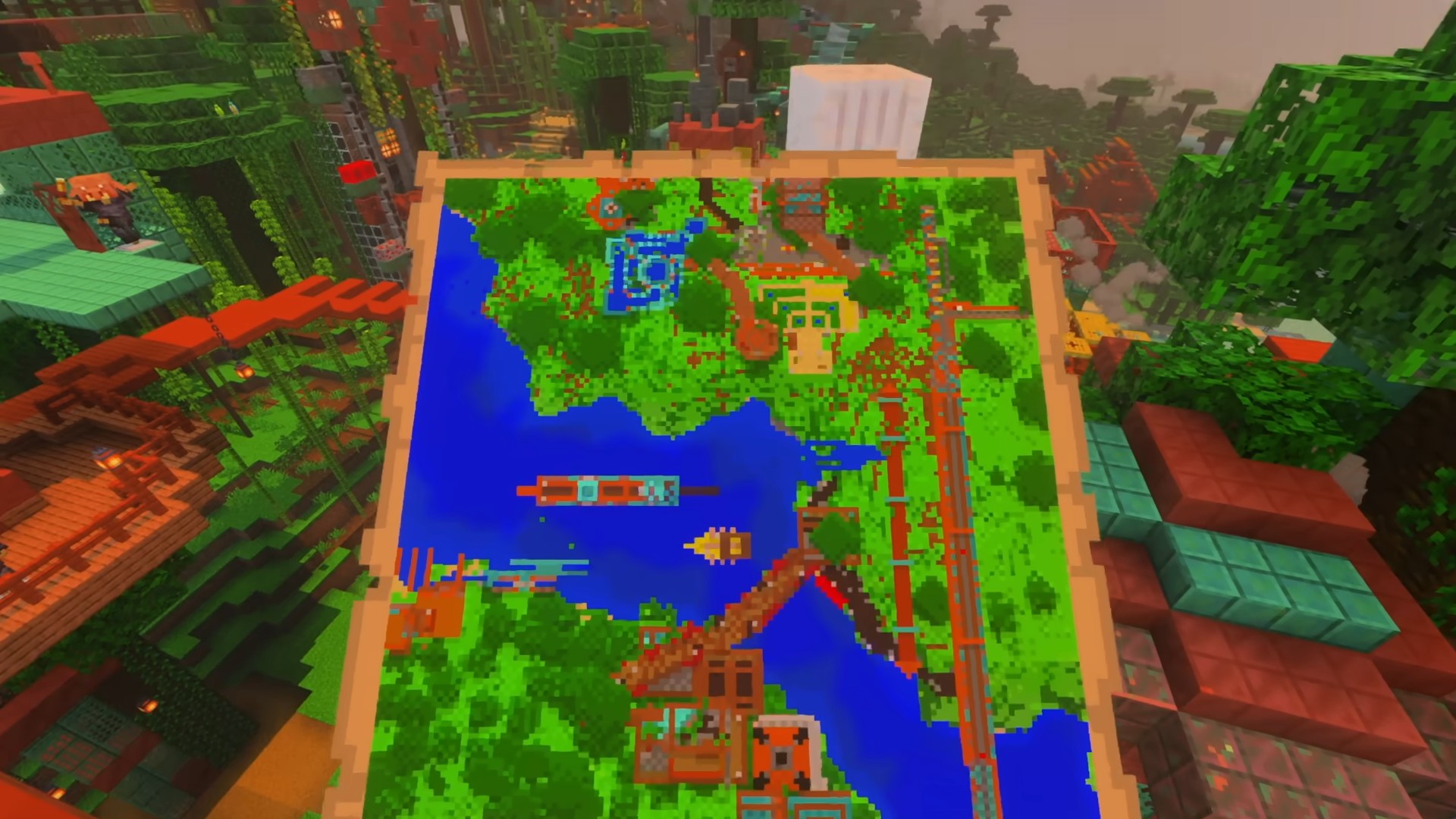
The subtler one: a spawn area far more impressive than anything else on the map. It usually means the world was built to recruit rather than to live in, and that the interesting players left a while ago.
The first week test
Join, do not build anything permanent, and watch. Is chat active or dead? Do people answer questions? Does anything get fixed when it breaks? A week of that tells you more than any amount of reading the rules page, and the cost of leaving is one starter base rather than a season of work.
If the server passes, the second week is when you pick a spot and commit. Committing early is how people end up with four abandoned bases on four dead servers.
Being a good member of one
Build far enough out that you are not in anyone’s way, close enough in that people see your work. Ask before you take from a shared farm, and replace what you take. And announce large projects in advance – most disputes on well-run servers are about surprise rather than about theft.
Contribute something shared early – a road, a public farm, a shop nobody asked for. It is the fastest way to stop being the new person, and on most servers the shared infrastructure is built by whoever decided to build it rather than by anyone in charge.
The servers that last are the ones where people stayed after the first month, and staying is mostly a social question rather than a technical one. Pick for the people, then check the backups. If nothing on the list appeals, running your own is a separate decision with its own costs.