Key takeaways
- Slot machines publish the numbers that video games keep hidden – return percentage, hit frequency, volatility and maximum payout are printed on the box.
- That transparency is a regulatory requirement rather than a design virtue, but it produces something genuinely useful: a reward system you can read before you play it.
- The mechanics transfer to game design; the business model does not, and the difference between those two statements is the whole point of looking at them.
Game designers have an awkward relationship with slot machines. The reward structures that drive loot boxes, gacha pulls, roguelite item drops and season passes all descend from the same behavioural research, and most of that research was done on gambling machines. We borrow the mechanics constantly and discuss the source rarely.
There is a reason worth examining beyond the discomfort. Slot machines are the only reward systems in common use that are legally required to disclose their mathematics. A video game can ship a loot box with an undisclosed drop rate in most jurisdictions. A regulated slot cannot ship without a published return percentage. That makes the genre an unusually clear object of study – not because the design is better, but because you can see it.
The four numbers
Any regulated slot discloses roughly the same set, and each one maps onto a decision a game designer makes with no vocabulary for it.
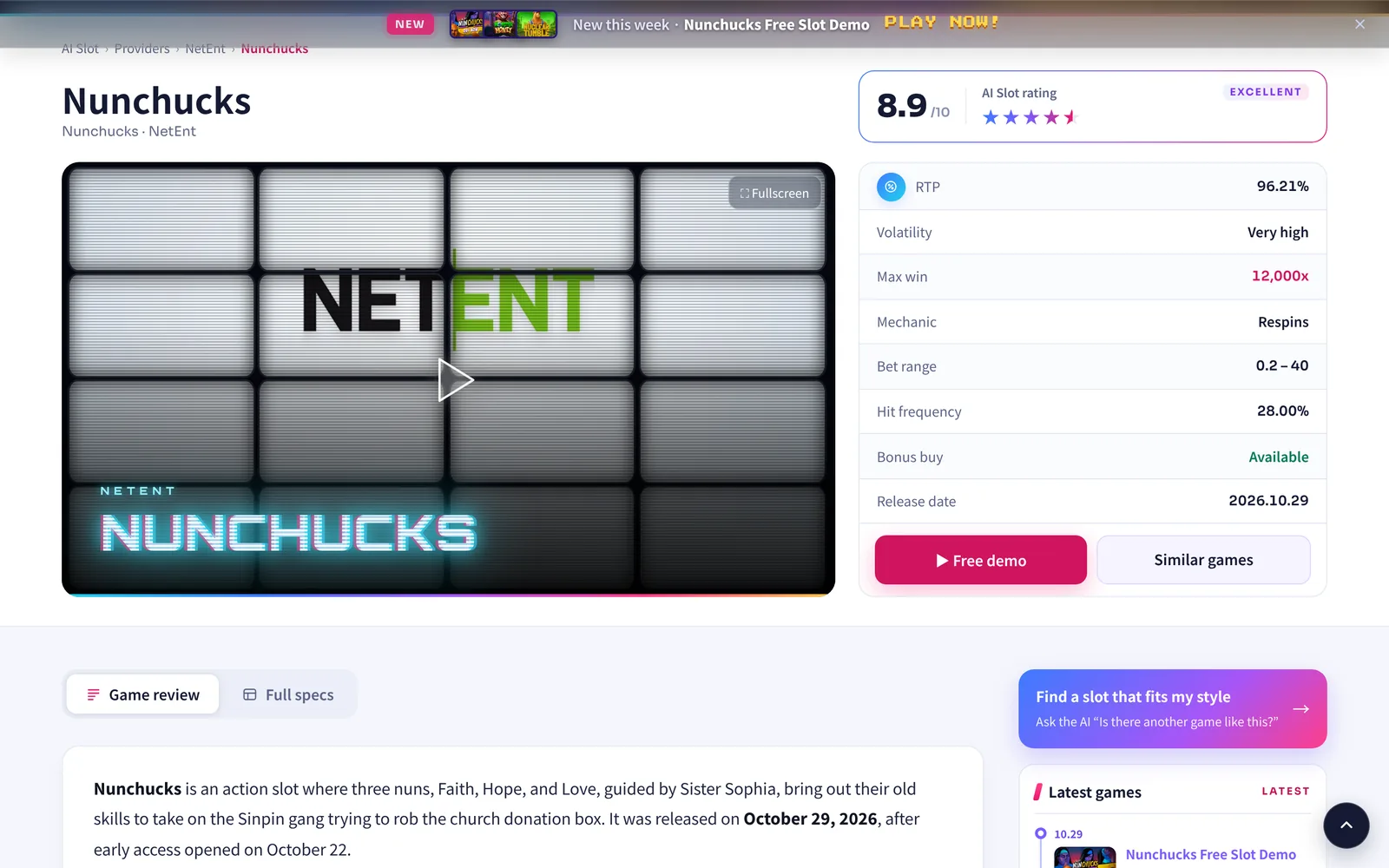
RTP (return to player). The long-run percentage of wagered money returned. Typically 94 to 97 percent. The inverse is the house edge, which is the entire business. Video games have no equivalent because there is nothing being returned – but the closest analogue is the expected value of a loot box relative to its price, which is exactly the number publishers decline to state.
Hit frequency. How often a spin returns anything at all, often around 20 to 30 percent. This is the texture of the experience. A 25 percent hit frequency means three out of four pulls return nothing, which is the rhythm the player actually feels.
Volatility. How the returns are distributed. Low volatility means many small wins; high volatility means long dry stretches punctuated by large ones. Two games with identical RTP can feel completely different depending on this one setting.
Max win. The theoretical ceiling, expressed as a multiple of the bet – 5,000x, 12,000x, 50,000x. Almost nobody reaches it. Its function is aspirational, and it is the number most prominently advertised.
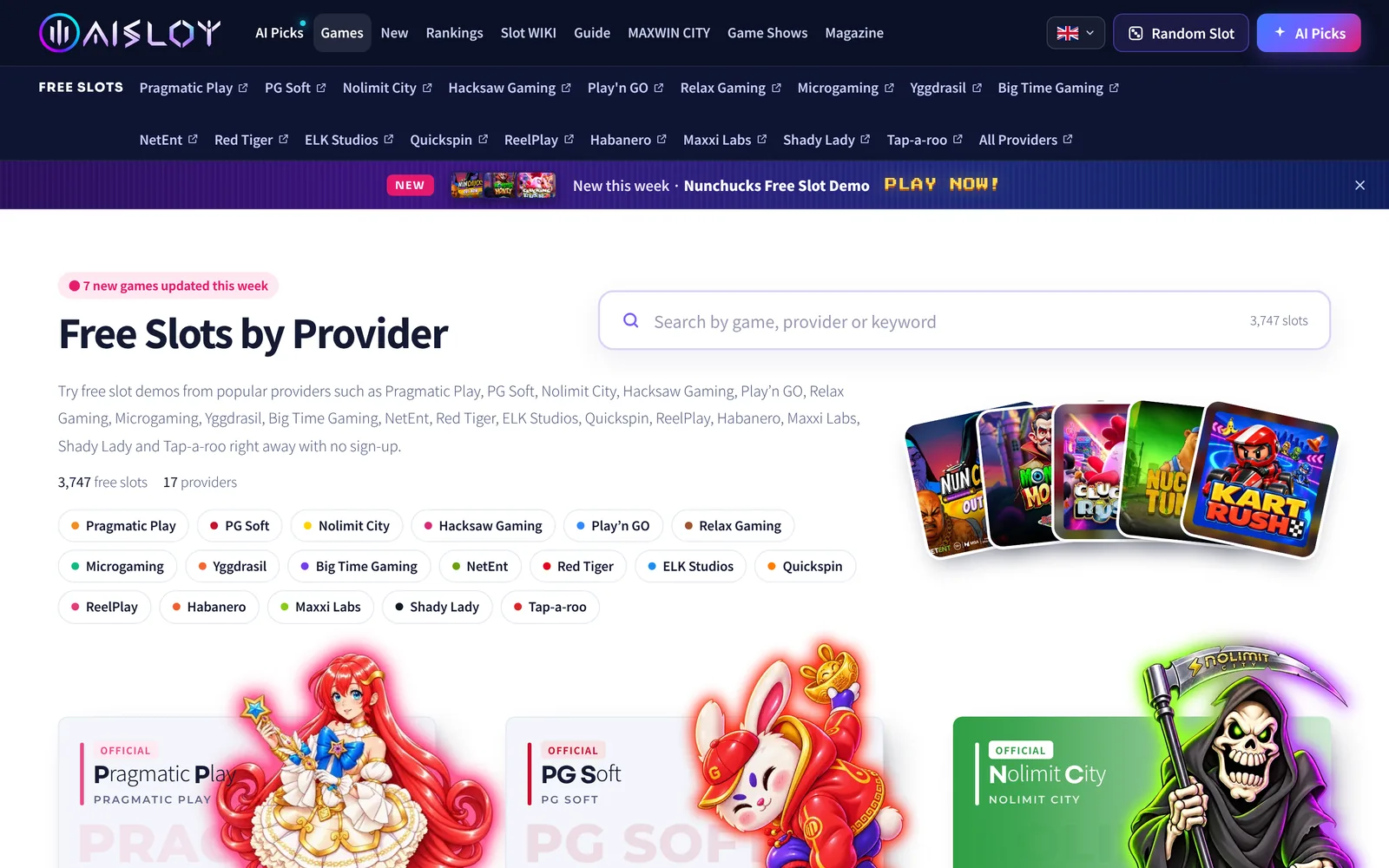
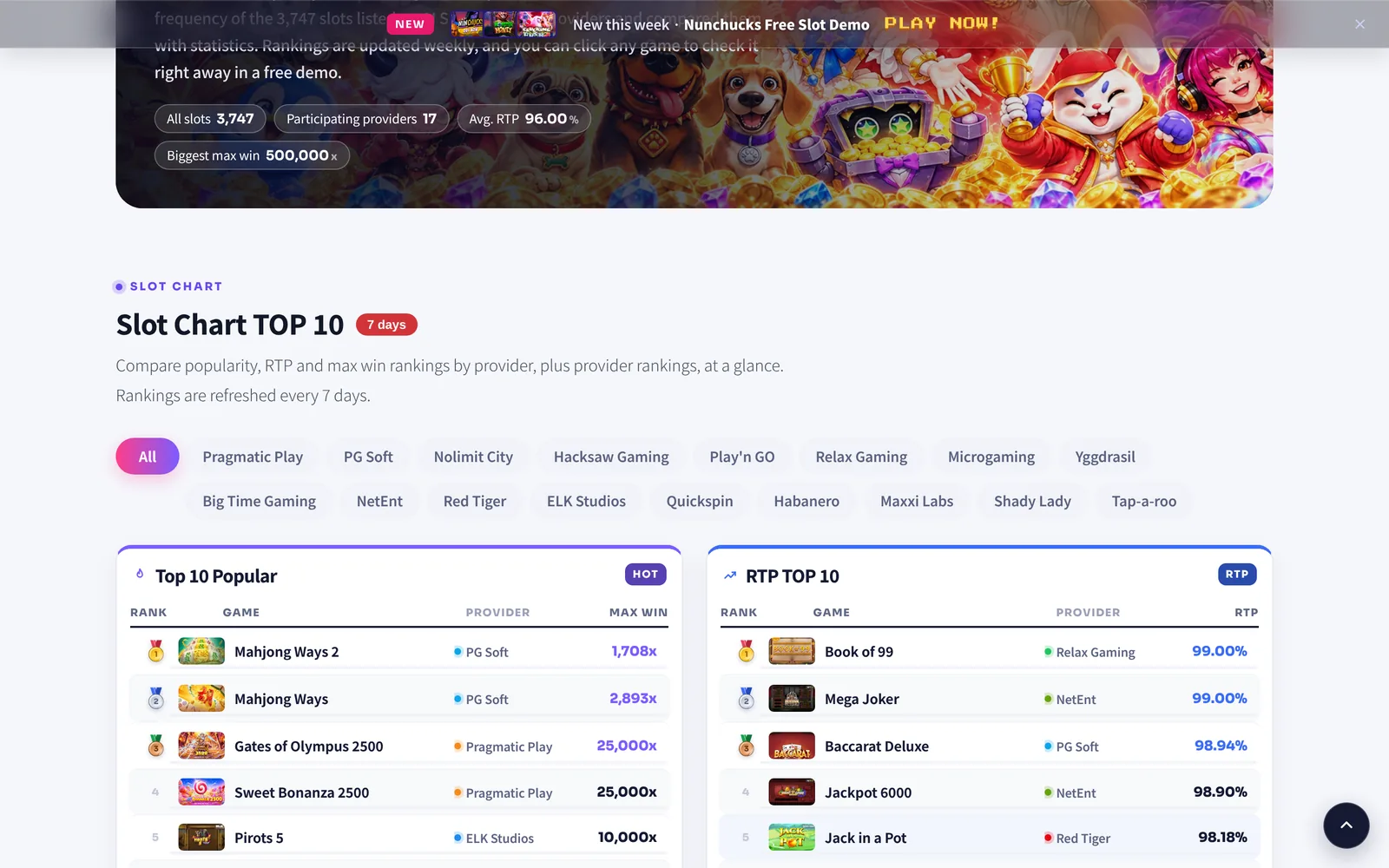
Put those four together and you have a complete specification of a reward schedule. Sites like AI Slot, which catalogues several thousand demo versions with those specs listed side by side, make the comparison trivial in a way it simply is not for game loot systems – you can sort by volatility and see what a design decision looks like across a hundred implementations.
What volatility teaches
The useful lesson for designers is the relationship between RTP and volatility, because it has a direct analogue in any game with random rewards.
RTP is the budget. Volatility is how you spend it. Give the same budget to two designers and one produces a steady drip of small rewards while the other produces long droughts and occasional spikes. Players sort themselves between these quite sharply, and the sorting has nothing to do with how good either system is.
Every loot system faces this. A roguelite can hand out a small upgrade every room or a transformative one every fourth floor. Both can average the same power gain. Our look at roguelite meta progression covers what the choice does to a run’s shape – high-volatility drops make runs feel distinct and make a bad run feel wasted, which is the same trade a high-volatility slot makes over an evening.
Where slots are more honest is that they tell you which one you are buying. A player who dislikes drought picks a low-volatility game on purpose. A game that shuffles its drop table without saying so leaves the player to infer the schedule from experience, which they do badly and resent.
Hit frequency is the part designers get wrong
Of the four numbers, hit frequency is the one most directly applicable and least discussed.
A slot at 28 percent hit frequency is not generous – most of those hits return less than the bet. But the near-constant small feedback is what keeps the session legible. Remove it and you have a machine that does nothing for forty spins, which no amount of eventual payout rescues.
Games make this mistake constantly. A loot system where most encounters produce nothing usable is not “high volatility”, it is dead space, and the fix is not a bigger jackpot but more frequent small returns. Our piece on scarcity in sandbox design covers the opposite failure, where everything is available and nothing registers – both are hit-frequency problems with different signs.
The slot industry solved this with the near-miss and with the loss disguised as a win, both of which are manipulative and both of which work. Game designers should know the techniques exist, use the first sparingly and the second not at all.
Where the comparison stops
This is the important part, and skipping it is how design writing about slots goes wrong.
A slot machine is a financial instrument with an art layer. The RTP figure means that a player who plays long enough loses, by design, at a known rate – that is not a flaw in the product, it is the product. Every mechanic in it, including the ones that look like good game feel, exists in service of extending time on device while that edge compounds.
A video game does not have that structure. A player who plays a roguelite for a thousand hours has not lost anything that was not freely given at the door. The mechanics are shared; the incentive gradient underneath them is not. When a game does import the financial structure – paid randomised rewards with concealed odds – it imports the problem too, and our look at the battle pass treadmill covers the milder version of the same pull.
The practical line is clear enough. Borrow the schedule design: hit frequency, volatility curves, the pacing of small returns against large ones. Do not borrow the concealment, and do not borrow the business model that makes concealment necessary.
Why free demos matter for studying this
One genuinely good development: nearly every slot studio now publishes free demo versions with play money, and aggregators collect them. You can open a 12,000x max-win game with 28 percent hit frequency and feel what that schedule does over two hundred spins without a transaction.
For a designer that is a usable research tool. Reading that a game is “very high volatility” tells you little; sitting through the dry stretch tells you a lot. It is also the honest way to satisfy curiosity about the genre, because the demo removes the only part that carries real risk.
The adjacent point for anyone designing difficulty or reward curves: the thing you are tuning is not the average, it is the distribution, and the distribution is only legible through play. Our piece on difficulty settings makes the same argument from the other direction – a number in a menu describes an experience badly, and the only way to know what a curve feels like is to sit in it.
Images: AI Slot (eiislots.com) site screenshots.