Switch a Minecraft world to creative and something strange happens: the building gets worse. Not immediately, and not for everyone, but the pattern is consistent enough to be worth explaining.
Scarcity is not friction that a sandbox tolerates. It is the thing generating most of the decisions.
A choice needs a cost
Choosing a block in survival means choosing not to use that block somewhere else, and choosing to spend the time it took to get it. Choosing a block in creative means clicking a different square in a menu.
The first is a decision. The second is a preference. Preferences are fine and they produce perfectly good results, but they do not accumulate into a design the way decisions do, because nothing was traded.
This is why creative builds often look more elaborate and less considered than survival ones. Every material is available, so no material was chosen over another.
The three things scarcity produces
A palette. A survival base is built from what is nearby, which means the local biome sets the material list. That constraint produces coherence for free – everything matches because everything came from the same place. A creative builder has to impose palette discipline deliberately, and most do not.
A history. Survival bases grow. The first room is cramped and made of dirt, the second is stone, the tenth is polished deepslate. That layering reads as time passing and it cannot be faked convincingly, because faking it means deciding where to put the ugly part.
A reason to go somewhere. Scarcity is what makes a location valuable. If you can have anything anywhere, the ocean monument is scenery.
What sandboxes do when they remove scarcity
Most of them add it back somewhere else, usually without saying so.
No Man’s Sky has effectively infinite planets and solves the resulting flatness with inventory limits, fuel costs and crafting chains – scarcity of capacity rather than of material.
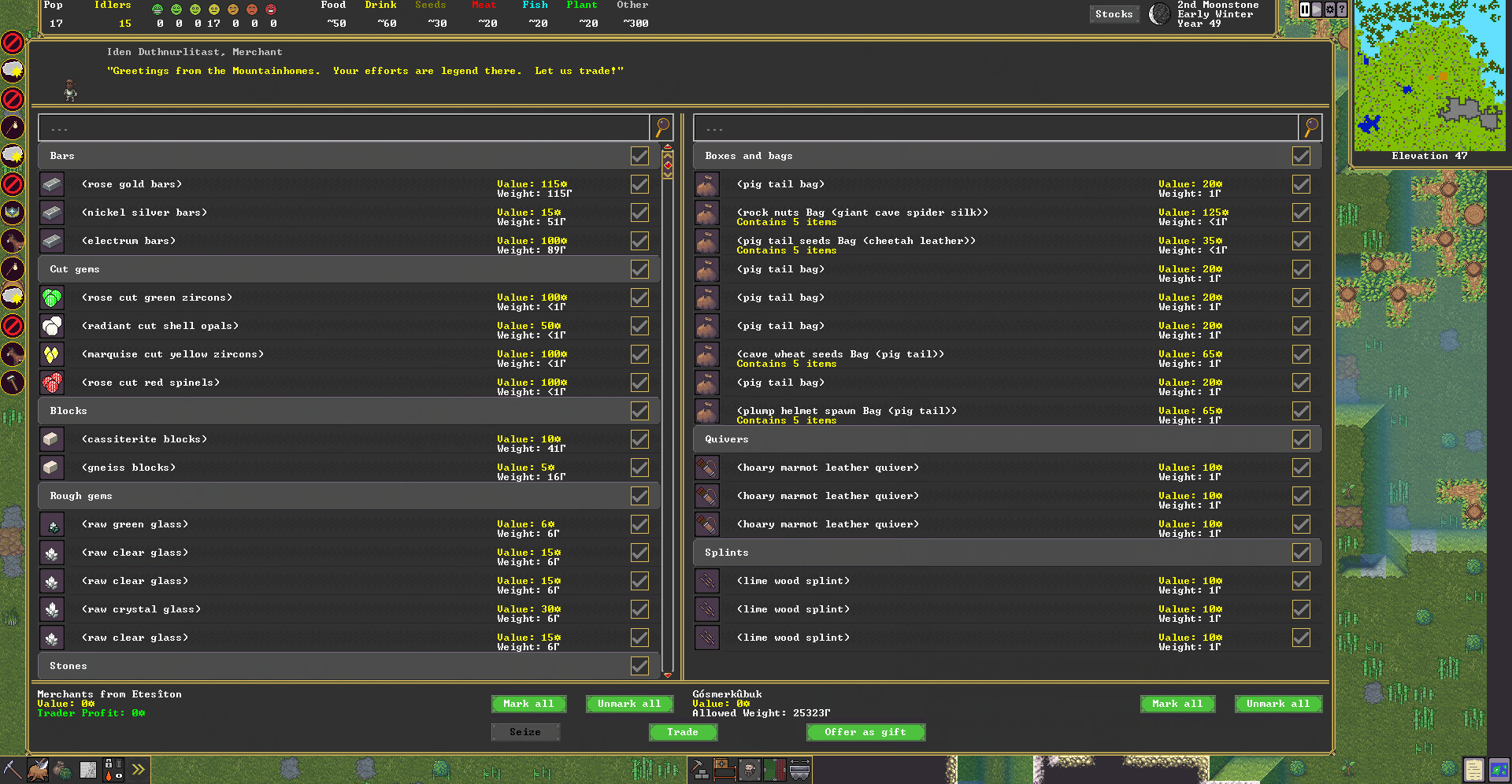
Dwarf Fortress has infinite stone and scarce everything else: labour, food, safety, and above all attention. The bottleneck is what you can manage, not what you can obtain.
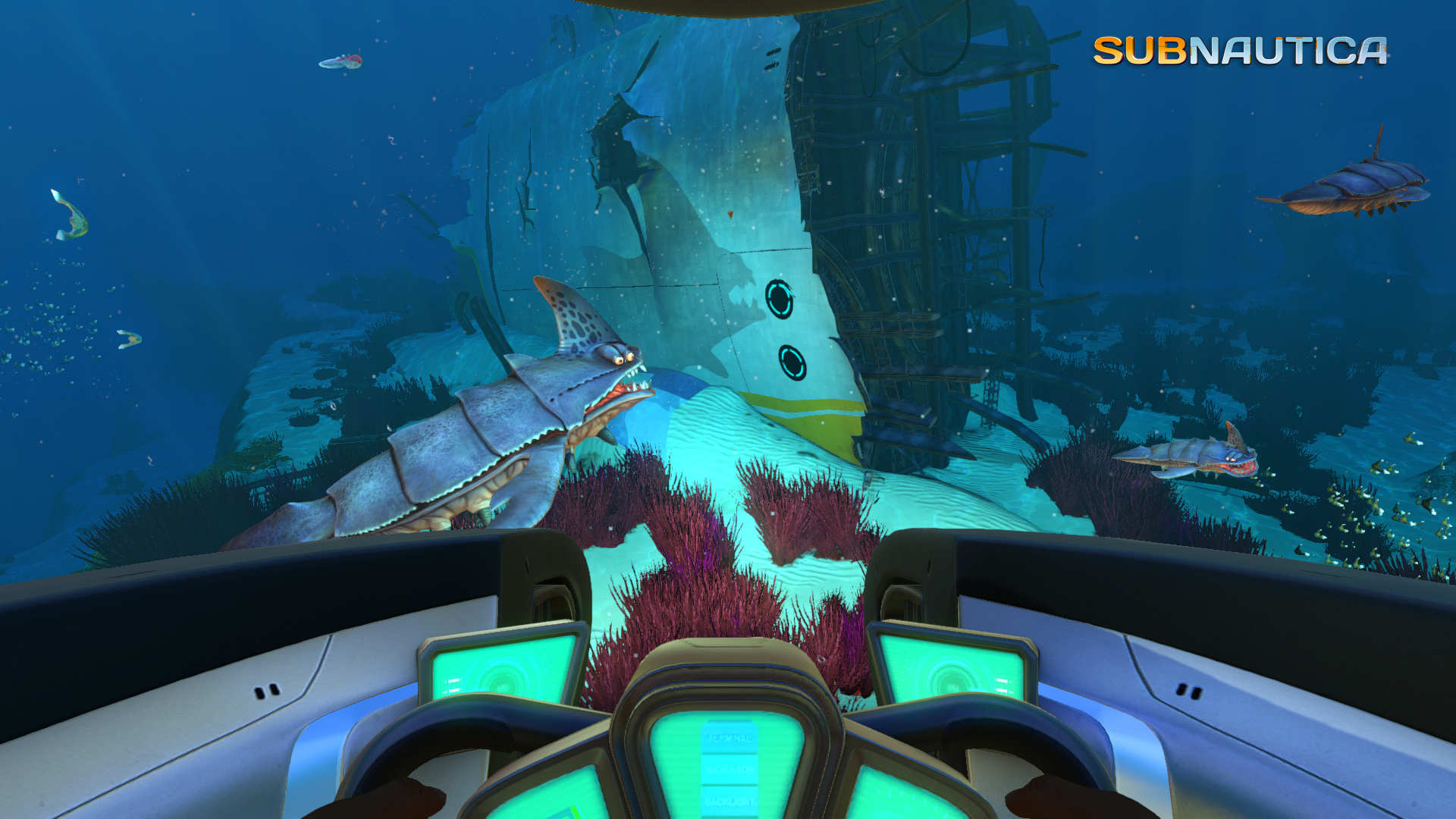
Subnautica has resources everywhere and makes depth the scarce thing. You can reach any material eventually; the question is what it costs to be down there.
All three replaced material scarcity with a different constraint rather than removing constraint. A sandbox with no scarce dimension at all does not become more free – it becomes a level editor.
The level editor is not a failure
Worth saying clearly: creative mode is good and so are level editors. They are a different activity with a different satisfaction, closer to drawing than to problem solving.
The mistake is expecting one to deliver the other. A player who finds creative unsatisfying is usually not missing difficulty – they are missing the sense that their choices cost something, which is a different complaint and is not fixed by adding enemies.
The same distinction sits under the argument about difficulty settings. Difficulty is about failure. Scarcity is about trade-offs. A game can have either without the other, and they feel nothing alike.
Why Minecraft’s version works
Its scarcity is unusual in being almost entirely about time rather than availability. Every material is obtainable and none is genuinely rare – diamonds are common once you know where to look, and the distribution is published.
So the cost of a block is measured in minutes, not in luck. That makes the trade-off legible – a player can estimate what a build will cost before starting it – and it makes the cost decrease with skill, which is what keeps a long-running world from becoming a grind.
It also means scarcity fades. Five hundred hours in, nothing is expensive, and that is when players either move to a new world, set themselves an artificial constraint, or stop. All three are reasonable responses to a sandbox whose scarce dimension has been solved.
The self-imposed constraint
Which is why the builder’s habit of arbitrary rules is not eccentricity. One biome only, no mods, survival-obtained materials, a fixed footprint – these are attempts to restore a scarce dimension the game has stopped providing.
They work for the same reason the original scarcity worked. A constraint you chose still generates decisions, and decisions are the thing being missed. The modular-settlement discipline in repeating a unit is the same move: a rule that rules things out is what makes the remaining choices mean anything.
For anyone designing one
Ask what is expensive. Not what is dangerous, not what is hidden – what costs the player something to use.
If the answer is nothing, the game will be pleasant for a few hours and will not hold. If the answer is one thing and it can be solved permanently, the game has a lifespan. If the answer is several things in tension, so that solving one makes another worse, it has a genre.
Images: Dwarf Fortress, No Man’s Sky and Subnautica project galleries.