Paths are the cheapest way to make a collection of buildings read as a place. A base with three good buildings and no connections between them is three buildings; the same three with a road, a bridge and a few fences is a settlement.
Why paths work
They imply people. A path is evidence that someone walks between two points often enough to wear the ground, which is a story the viewer completes automatically.
They also direct the eye, which means they control how a build is approached and what is seen first.
Width and irregularity
A uniform three-wide path reads as a corridor. Real paths vary – wider where they meet a building, narrower between, wider again at a junction.
- Two to four blocks for a footpath, varying along its length.
- Five to seven for a road that carts would use.
- Widen at every entrance and junction.
- Never a perfectly straight edge for more than a few blocks.
Materials
The mistake is one material for the whole path. Two or three, mixed irregularly, with the proportions shifting along the route.
- Dirt path blocks – the obvious base, and flat.
- Coarse dirt and podzol – for texture at the edges.
- Gravel – reads as a made surface.
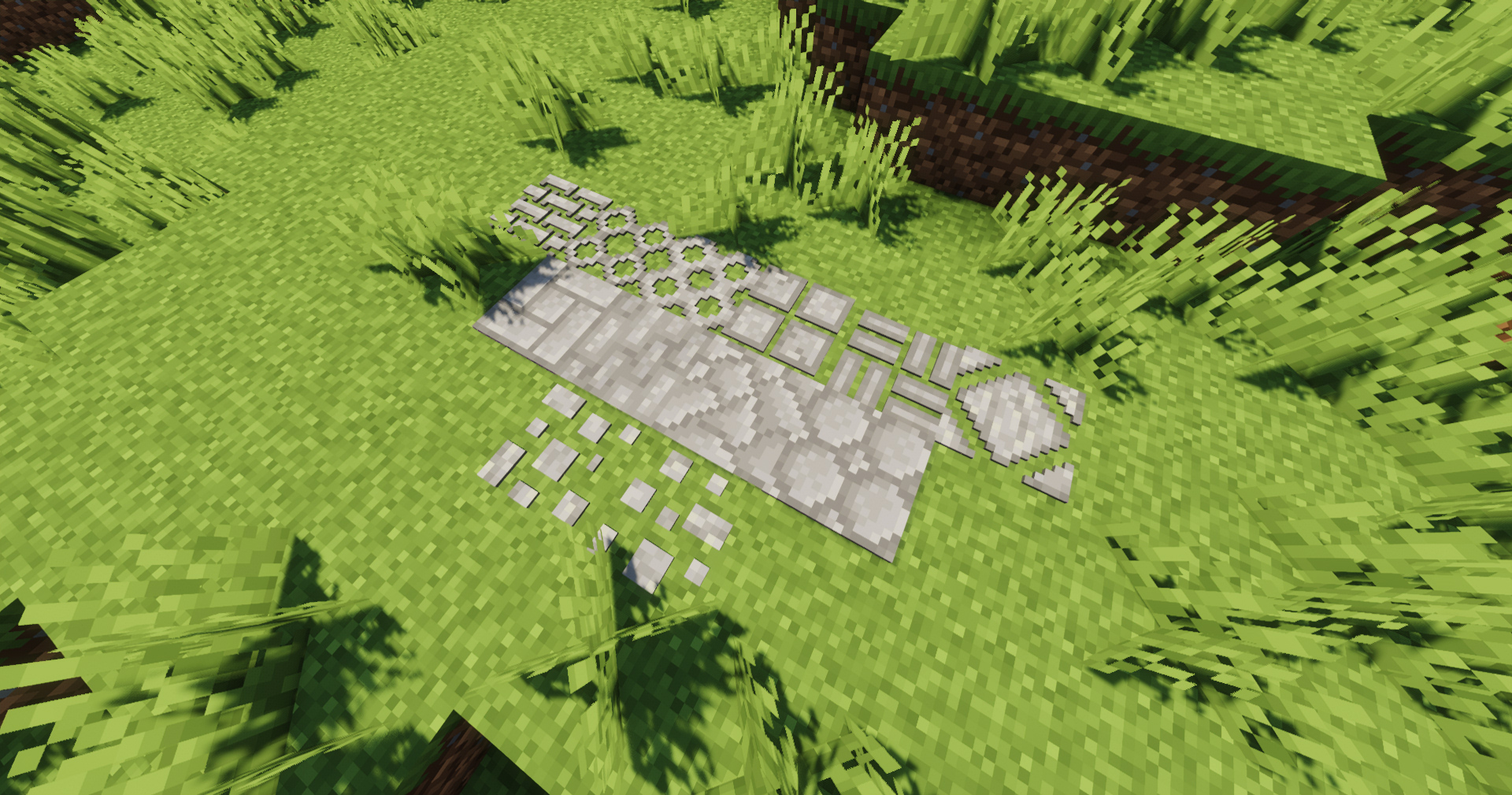
- Cobblestone and andesite – for anything paved.
- Stone slabs set one below grade – for the most formal treatment.
Sinking a paved path one block below the surrounding ground, with the grass edge above it, is the single most effective technique here. It reads as a surface that has been walked down.
Edges
How a path meets the ground beside it is most of the effect. A hard line is wrong; a fraying edge where path material scatters into the grass and grass encroaches onto the path is right.
The simplest version: place the path, then randomly swap a dozen edge blocks in each direction. It takes two minutes and it is the difference.
Contouring
Paths go around hills, not over them. A path that climbs a slope directly reads as a game object; one that switchbacks or contours around reads as a route someone chose.
Where a path must climb, steps – stone slabs and stairs set into the slope, irregularly spaced – are what real paths do.
Roadside detail
- Fences or low walls along one side, not both.
- A lantern on a post at intervals, irregularly spaced.
- Grass, flowers and the occasional bush at the edges.
- A cart, a barrel, a woodpile where the path meets a building.
- A signpost at any junction.
Lighting a path is also spawn-proofing it, which makes it one of the few purely decorative elements that is also functional – the relevant thresholds are in the spawning rules guide.
Bridges
Where a path crosses water or a ravine, the bridge is the most visible single element in the whole route. It deserves more attention than the path.
- Supports that reach the ground or the water, not a floating span.
- A parapet or railing, at least on one side.
- A slight arch rather than a flat deck.
- Material that relates to the buildings, not to the path.
Floating flat bridges are extremely common and look wrong for a reason that is easy to name once you see it: nothing is holding them up.
Junctions
A junction is a place, not just a crossing. Widening it, putting something at the centre – a well, a tree, a signpost, a small monument – turns a meeting of two paths into somewhere people would stop.
Villages do this instinctively and it is one of the things worth taking from them – what village and outpost designs teach builders covers how generated settlements handle circulation.
Scale of the network
Connect everything you use. If you walk between two points regularly, there should be a path, and if there is not, the base reads as unfinished even when every building is complete.
Paths to places you do not go are worse than no paths, because they promise somewhere and deliver nothing.
A quick pass on an existing base
- Walk your usual route between buildings and put a path exactly there.
- Vary its width.
- Fray the edges.
- Light it.
- Put something at the junction.
An hour, and a base that looked like separate builds starts looking like one place.
Paved roads
A formal road in stone needs a different approach from a dirt path. It wants straighter edges, a consistent width, and a visible construction – a kerb of slabs, a crown in the middle, drainage at the sides.
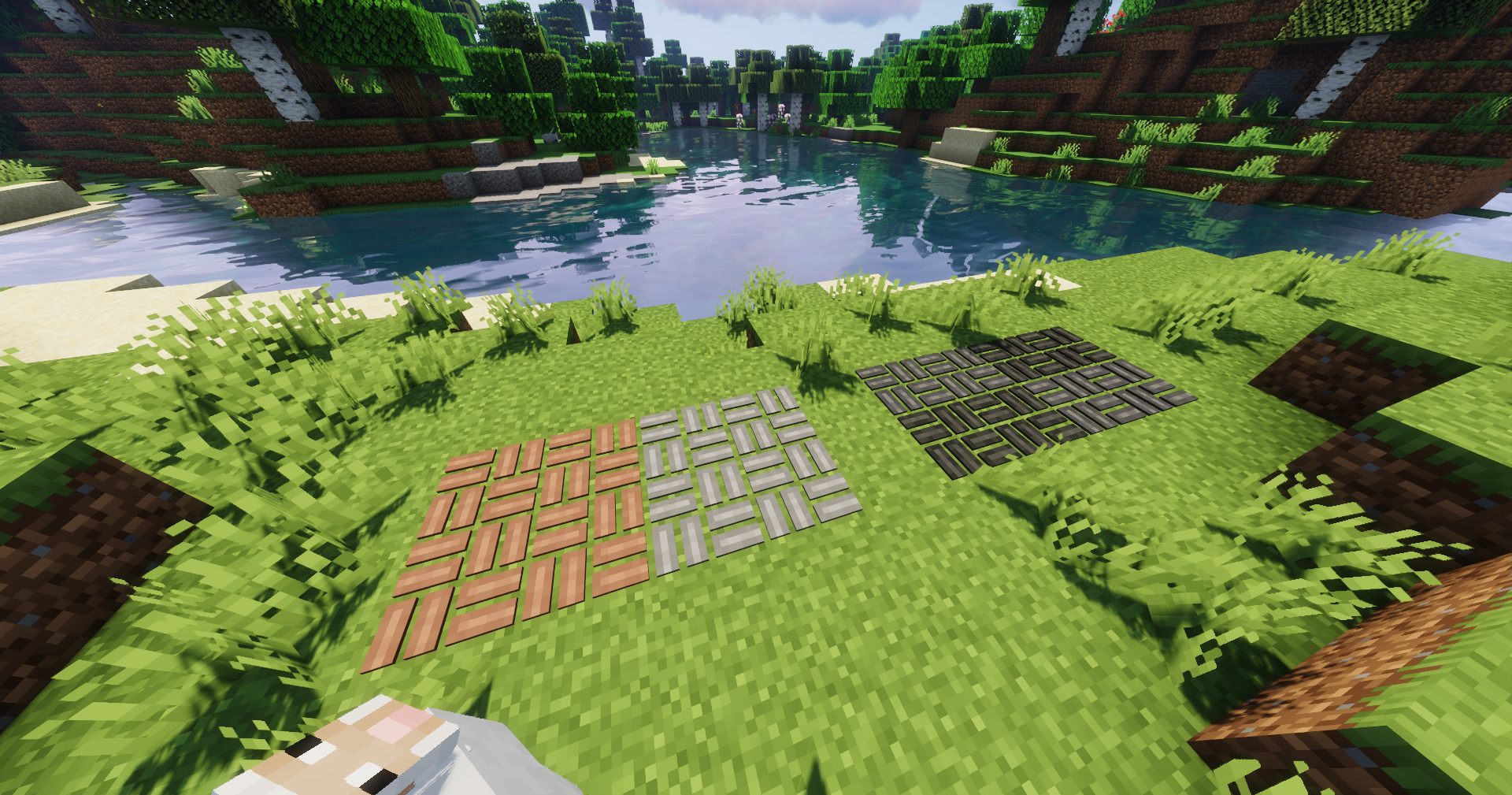
- Stone or andesite for the surface, in two or three related tones.
- A kerb one block higher at each edge, in a contrasting stone.
- Cracked and mossy variants scattered, increasing with age.
- A gutter – a line of slabs one below grade – along one side.
Paved roads read as civic infrastructure, which makes them right for a town and wrong for a farmstead.
Where paths should not go
Everywhere. A base with a path to every corner reads as a theme park. Paths go where people actually walk, which in practice is three or four routes, and everywhere else is grass.
Images: Macaw’s Paths and Pavings project gallery on Modrinth.