Key takeaways
- A palette is three to five block families, not twenty individual blocks.
- Value – how light or dark a block reads at distance – matters more than hue.
- Texture density is the variable most beginners ignore, and it is what makes a wall look noisy.
The difference between an amateur build and a good one is rarely the shape. It is usually the block selection, and specifically the discipline to use fewer blocks than the game offers.
Start with three families
Pick a base, a secondary and an accent. Base is the bulk of the structure – stone bricks, deepslate, oak planks. Secondary breaks up the base and handles trim, frames and edges. Accent appears rarely and draws the eye: copper, a bright wood, a coloured terracotta.
Three families with their variants – stairs, slabs, walls, chiselled versions – give more than enough vocabulary for a large build. Adding a fourth family is a decision, not a default.
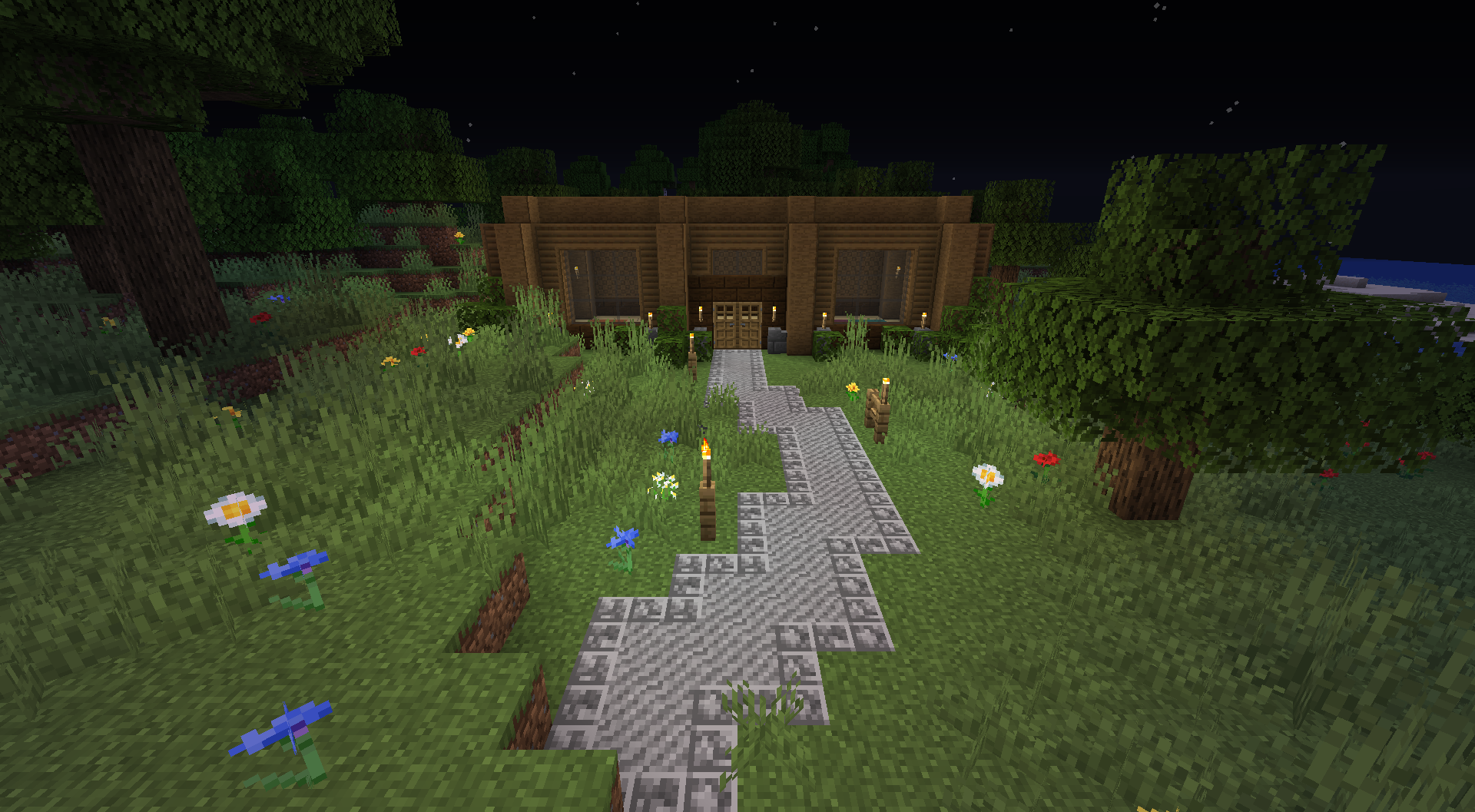
Value before colour
Squint at a screenshot of your build until the colours blur. What remains is value: the pattern of light and dark. If everything is mid-grey, the build reads as flat no matter how many different blocks are in it.
A working palette has a clear value range. Deepslate against diorite works because the contrast is large. Andesite against stone fails because it is not, and the detail you spent an hour placing disappears from ten blocks away.
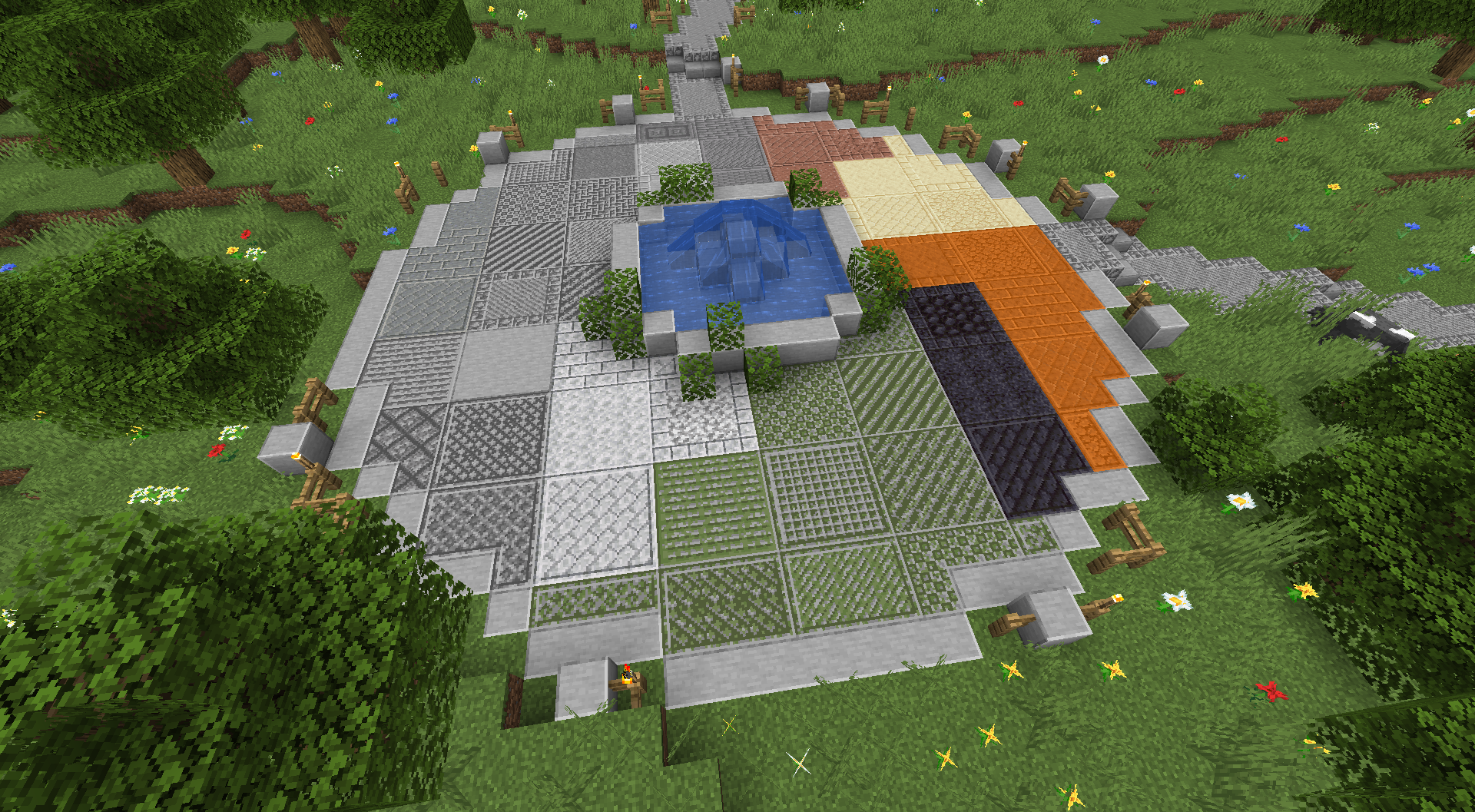
Texture density is the hidden variable
Some blocks are visually busy – gravel, coarse dirt, mossy variants, bookshelves. Others are calm – smooth stone, plain planks, concrete. A wall of busy blocks reads as noise, and the shapes stop being legible.
The usual fix is to put busy blocks in small areas and calm blocks across large ones. Use gravel for a path, not for a facade. This single rule fixes more amateur builds than any amount of extra detailing.
The three common mistakes
First, using every new block from the latest update at once because it is new. Second, choosing blocks in the inventory rather than in the world, where lighting and scale change how they read. Third, detailing before the shape is finished, which locks in a silhouette that does not work and then decorates it.
Our view is that the block variety added over the last several updates has quietly raised the difficulty of building well. When there were forty blocks, a decent palette happened by accident. With hundreds, restraint has to be deliberate, and most tutorial-driven builders are never told that.
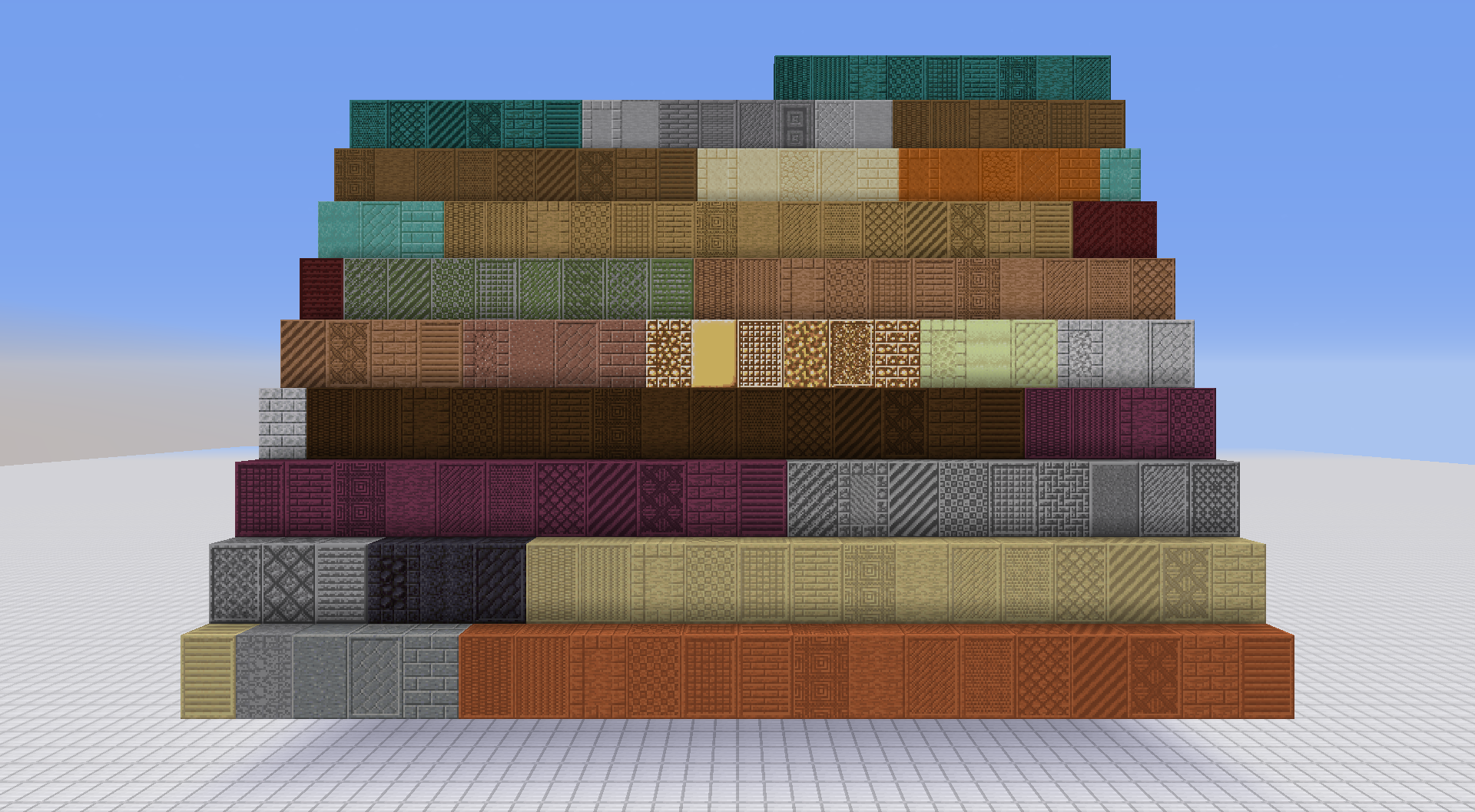
Testing a palette cheaply
Build a two-block-thick, ten-block-wide test wall in creative, in the biome and at the time of day the real build will exist in. Put the candidate palette on it, walk thirty blocks away and look back. Most bad palettes reveal themselves in that one step, before you have invested a weekend.
For structural technique rather than surface, see the roof building guide, and the rest of the builds hub.
Building a palette from a reference
The fastest way to a good palette is to steal one. Take a photograph of a real building, or a screenshot of a build you admire, and identify the three or four dominant materials by value rather than by name. Then find the Minecraft blocks that occupy those same positions on the light-to-dark range.
This works because the thing you liked about the reference was almost never the specific material. It was the relationship between the materials, and that relationship transfers.
Lighting changes everything
A palette chosen at noon looks different at dusk and different again indoors. Blocks with strong colour saturation shift the most. If a build will mostly be seen at night, test it at night, and expect to need more value contrast than a daytime build to stay legible.
Biome context
A build does not exist in isolation. A dark palette against a dark forest disappears; the same palette on a snowy plain is striking. Before committing, place a test wall on the actual site rather than in a flat creative world, because half of the palette’s effect comes from what surrounds it.
When to break the rules
Large builds can support more materials than small ones, because the eye has room to move. A castle can carry six families where a cottage cannot carry four. The rule about restraint scales with size, and knowing that is the difference between disciplined and timid.
One habit worth keeping
Screenshot every build you finish and look at the folder a month later. Palette mistakes that were invisible while building are obvious in a thumbnail, and that single habit improves block selection faster than any tutorial.
Images: Rechiseled project gallery on Modrinth.