Key takeaways
- A hive fills in five stages and only produces once bees have visited flowers and returned.
- Harvesting without a campfire underneath angers the colony. With one, they ignore you completely.
- Flower density near the hive is the real throughput limit, not the number of bees.
Bee farms are small, cheap and produce two genuinely useful outputs: honey bottles for food and curing poison, and honeycomb for waxing copper and crafting candles. They also break in predictable ways.
The production cycle
A bee leaves the hive, finds a flower, pollinates it, and returns. Each successful return advances the hive’s honey level by one, and at level five the hive is full and can be harvested. Nothing accumulates while the bees are idle or cannot find flowers.
This is why a hive surrounded by grass produces nothing. Flowers are the input, and the bees need them within their search radius.
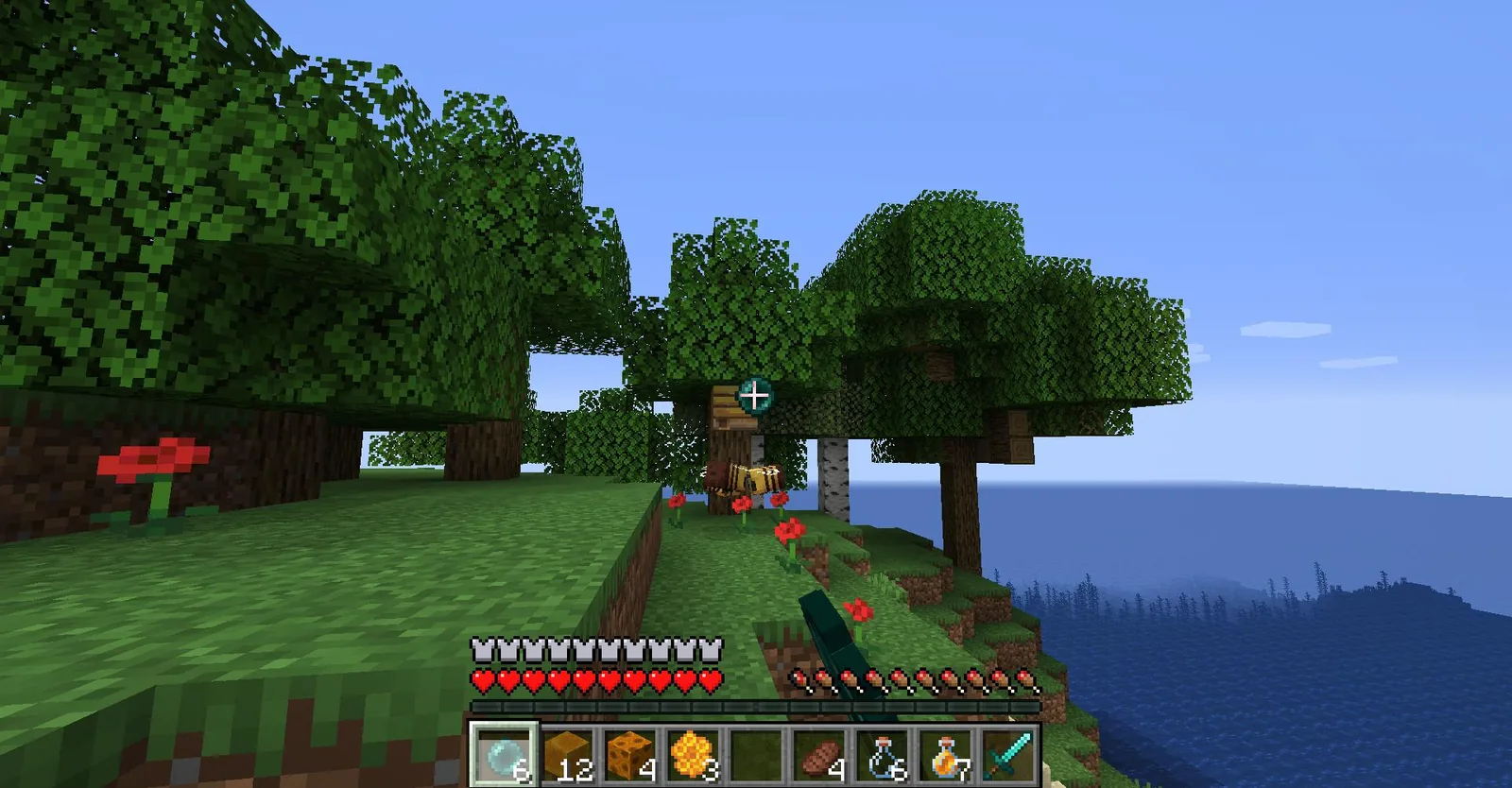
Moving a colony
A hive or nest broken with a tool enchanted with silk touch keeps the bees inside. Without silk touch, the bees are released and become hostile, and a nest is destroyed rather than dropped.
Move at night or during rain when bees are inside, use silk touch, and place the nest where you want it. This is the only reliable way to relocate a wild colony, and it is worth the enchantment cost – wild nests are the only source of a starting colony.
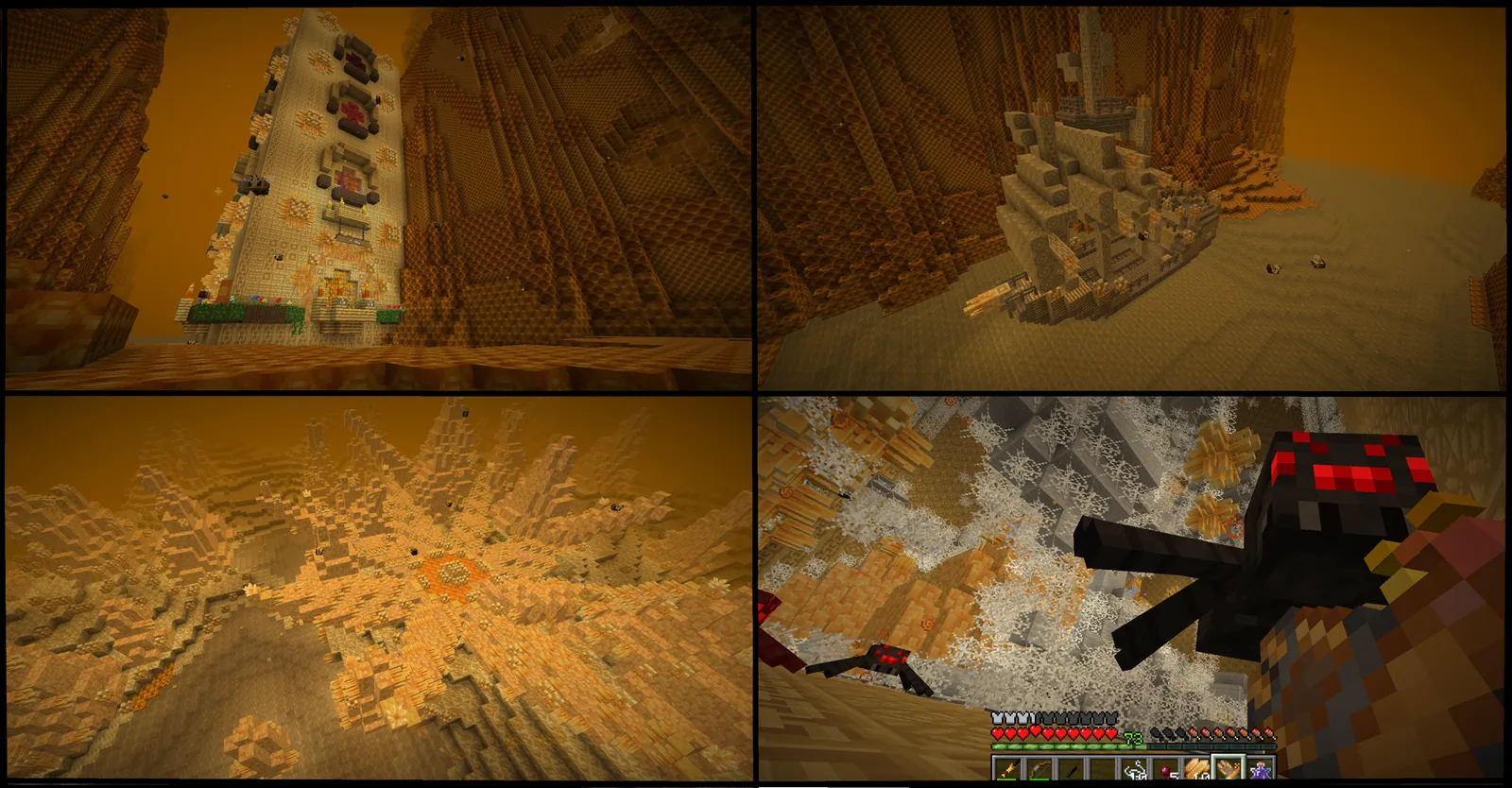
The campfire rule
Harvesting honey or honeycomb from a hive normally provokes every bee in it. A campfire placed under the hive, with the smoke reaching it, suppresses that entirely. The bees stay calm and you can harvest indefinitely.
Cover the campfire with a trapdoor or a slab so the smoke still rises but the fire cannot burn the wooden components of the build. This is the single most common bee farm design error, and it usually ends with the farm on fire.
Layout for throughput
Put the hive at the centre of a dense flower patch. Bone meal on grass produces flowers quickly, and a small area of solid flowers outperforms a large sparse one because travel time between hive and flower is the limiting factor.
Multiple hives sharing one flower field work well. Multiple hives each with a few flowers do not. If you want to scale, expand the flowers first and add hives second.
Our take is that bees are the clearest example of Mojang building a small simulation rather than a resource block. Nothing about the output requires this much behaviour – pollination, travel, hive states, anger propagation. The system exists because it is pleasant to watch, and that is a legitimate design goal that the game does not get enough credit for.
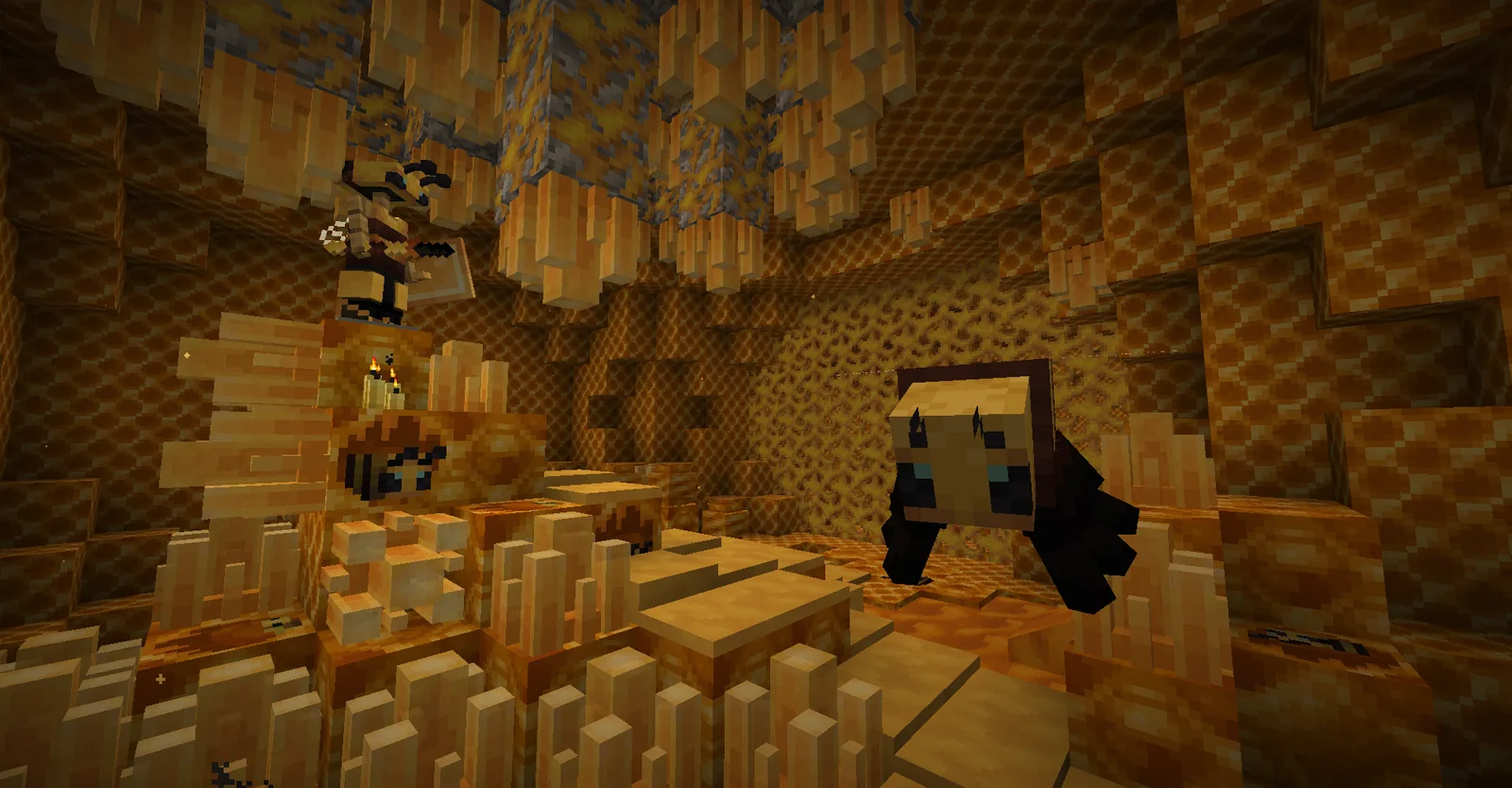
What honey and comb are for
Honey bottles restore hunger and remove poison, which makes them situationally better than any other food. Honeycomb waxes copper to stop oxidation – the only way to lock a copper build at the colour you want – and crafts into candles.
The copper application is the one most builders care about, and it is covered in the builds section.
Anger, and how it propagates
Attacking one bee angers the whole hive, and angry bees sting, poison and then die. Losing a colony to a single careless hit is the most common bee farm failure after fire. A campfire prevents the harvesting case; nothing prevents the case where you swing at a bee by accident, so keep the farm away from paths where you are fighting mobs.
Pollination and crops
Bees speed up crop growth as they pollinate, which makes a hive next to a farm genuinely productive rather than decorative. The effect is modest per plant and adds up across a large field, and it costs nothing beyond keeping flowers nearby.
Placing the hive between the flower patch and the crops gives you both: pollination for the field and a hive that fills at a reasonable rate.
Automating the harvest
A dispenser with shears pointed at a full hive collects honeycomb without angering the bees, and a hopper underneath catches the drop. The same setup with bottles collects honey. This is one of the few pieces of vanilla automation that is genuinely simple, and it turns a manual chore into a passive supply.
Use a comparator to detect when the hive is full rather than running the dispenser on a clock. It is cleaner, it costs less tick time, and it avoids wasting shears on an empty hive.
Quick setup summary
Bone meal a dense flower patch, place the hive in the middle, put a campfire underneath with a slab over it, and fence the area. That is a functioning farm in five minutes, and everything beyond it is scale rather than complexity.
Images: The Bumblezone project gallery on Modrinth.